
Monthy Survey of Services
Services have negative change of 0.1%, interrupting a row of positive results


January 13, 2026 09h00 AM | Last Updated: January 13, 2026 02h22 PM
In November 2025, the country's service volume showed a negative change of 0.1% compared to October, in the seasonally adjusted series, interrupting a sequence of nine positive results, a period in which it accumulated a gain of 3.8%. Thus, the service sector is 20.0% above the pre-pandemic level (February 2020) and operates, in November 2025, 0.1% below the record of the time series, reached in October 2025.
Two of the five service activities surveyed showed a decrease compared to the previous month: transportation (-1.4%) and information and communication (-0.7%). On the other hand, professional and administrative services (1.3%) and other services (0.5%) showed progress compared to October 2025. Services rendered to families (0.0%) remained stable this month.
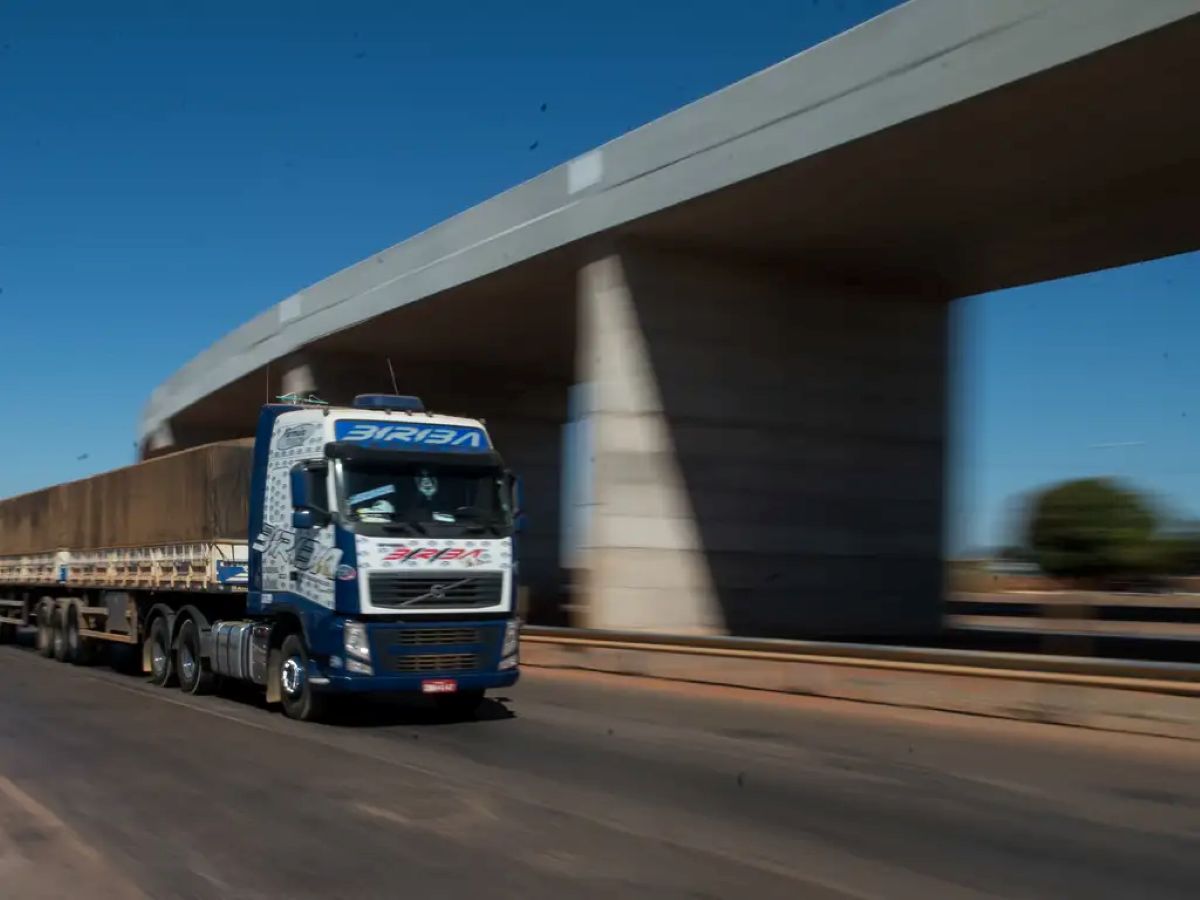
Rodrigo Lobo, manager of the IBGE's Monthly Survey of Services, observes that "the result reflects a certain maintenance of the services sector at high levels, since in the previous month the sector had reached the peak of its time series, which began in January 2011. For the month of November, there is a balance between negative and positive rates. The highlight in the negative field is the transportation sector, pressured by air transportation, collective road passenger transportation, pipeline transportation and cargo logistics."
Compared to November 2024, the services sector grew by 2.5%, its twentieth consecutive positive result. This increase was accompanied by four of the five activities and by 47.6% of the 166 services investigated. The main positive impacts in this comparison came from information and communication (3.4%) and from transportation, transportation support services and mailing (2.5%). Other advances came from professional, administrative and complementary services (3.2%); and from other services (1.9%).
The only negative influence came from services rendered to families (-1.0%), due to reduced revenue from restaurants, hotels, and theatrical and musical performances.
Information and communication lead the year-to-date gains
The year-to-date figure up to November 2025, compared to the same period in 2024, grew by 2.7%, with positive rates in four of the five activities and in 53.6% of the 166 types of services covered by the PMS. The most significant positive contributions came from the information and communication sector, which grew by 5.4% and was driven by the segments of portals, content providers and other internet information services; software development and licensing; information technology consulting; Data processing, application service providers and internet hosting services; custom software development; and technical support, maintenance and other information technology services.
Other advances came from transportation, transportation support services and mailing (2.5%); professional, administrative and complementary services (2.4%); and services rendered to families (0.9%).
Conversely, other services (-0.9%) exerted the only negative influence, largely pressured by lower revenue from support activities of financial services; maintenance and repair of motor vehicles; credit card administration; insurance brokers and agents, supplementary pension and health insurance; and maintenance and repair of computers and peripheral equipment.
Rodrigo Lobo explains that “since the post-pandemic period, the information and communication segment has shown great dynamism, as there has been growing demand for IT consulting, software development and licensing, data processing, content providers, etc. IT services have been one of the driving forces of the services sector in recent years, and this continues to be confirmed throughout 2025.”
Tourism Activities show a positive change of 0.2% in November
In November 2025, the tourism activities index showed a positive change of 0.2% compared to the previous month, marking the fourth consecutive positive result, accumulating a gain of 2.4% during this period. With this, the tourism sector is 13.0% above the level of February 2020 and 0.8% below the peak of its time series, reached in December 2024.
According to the manager of the IBGE's Monthly Survey of Services, “this result shows tourism recovering from the 2.3% loss observed between May and July. In November, as the result was very close to stability, we did not have very significant movements, but we can say that restaurant revenues had a slight predominance over the decline observed in air passenger transportation.”
Eight of the 17 locations showed positive rates compared to October. The most significant positive influence came from São Paulo (0.9%), followed by Bahia (1.9%), Pará (5.3%) and Goiás (2.9%). The negative highlights were Rio de Janeiro (-3.2%), Federal District (-5.0%) and Rio Grande do Sul (-2.9%).
Compared to November 2024, the volume of tourism activities in Brazil grew by 2.1%, its eighteenth consecutive increase. Positive rates were seen in 14 of the 17 FUs where the indicator is investigated, notably Rio de Janeiro (4.0%), São Paulo (1.2%), Pará (24.4%), Rio Grande do Sul (7.8%), Bahia (5.6%) and Paraná (4.7%). The three negative impacts of the month came from Minas Gerais (-5.4%), Goiás (-6.9%) and Santa Catarina (-3.5%).
Passenger transportation declines 0.5% and cargo transportation changes -0.1%
In November 2025, the volume of passenger transportation in Brazil showed a 0.5% decrease compared to October, in the seasonally adjusted series. This puts the segment 12.5% above the pre-pandemic level (February 2020) and 13.5% below the peak of the time series (February 2014).
Cargo transportation showed a slight decrease (-0.1%) and is 2.7% below the highest point in its series (July 2023) and 40.5% above the pre-pandemic level.
With COP30, the service sector in Pará has its second consecutive increase
Belém, the capital of Pará, hosted the 30th UN Conference on Climate Change (COP 30) between November 10th and 21st, 2025, which generated economic impacts for the state that month. The volume of services in Pará registered its second consecutive increase, with a cumulative gain of 4.9%. With this, the state reached the peak of its series in November 2025. The economic activities that most impacted the service sector in Pará were: cleaning services, security, airport concessionaires, air transportation of passengers, lodging and food services, car rental, and generator rental.
With a 1.09% share of the total volume of services, the growth of services in Pará exerted the third largest positive impact compared to October, in the seasonally adjusted series. Furthermore, it was the fifth largest contribution compared to November 2024. These effects illustrate some of the economic consequences caused by the organization of this large-scale event in the city of Belém.
More about the survey
The PMS allows for the monitoring of the service sector in the country, investigating the gross revenue from services in formally constituted companies with 20 or more employed persons, whose main activity is non-financial services, excluding the areas of health and education. Results are available for Brazil and all Federation Units. The data can be consulted on Sidra. The next release of the PMS, relating to the month of December 2025, will be on February 12, 2026.