
Continuous PNAD
Proportion of young people who do not work, study or qualify drops


June 19, 2026 10h00 AM | Last Updated: June 29, 2026 04h50 PM
Highlights
- Brazil had 46.6 million young people aged 15 to 29 years in 2025, and 17.5% of them were not working, studying in regular education or attending any professional qualification course. This proportion dropped 4.9 percentage points (p.p.) compared to 2019, when 22.4% of the Brazilian young people did not work, study or qualify.
- Compared to 2024, when 18.2% of the Brazilian young people were in that working and studying condition, there was a reduction of 0.7 p.p.
- The total number of young people who were not employed, did not study or qualify fell from 11.0 million in 2019 to 8.2 million in 2025, a reduction of 25.9% in the period. Compared to 2024, when there were 8.6 million young people in this condition, the drop was 4.8%.
- Around 22.8% of young women were not employed, studying or qualifying, while, among men, this percentage was almost half: 12.4%.
- The percentage of young black or brown people (19.8%) who were not studying and were not employed or qualifying was 5.8 p.p, higher than that of young white people (14.0%) in the same condition.
- In 2025, nearly 14.2% of the population aged 14 or over (or 24.8 million) attended some professional qualification course.
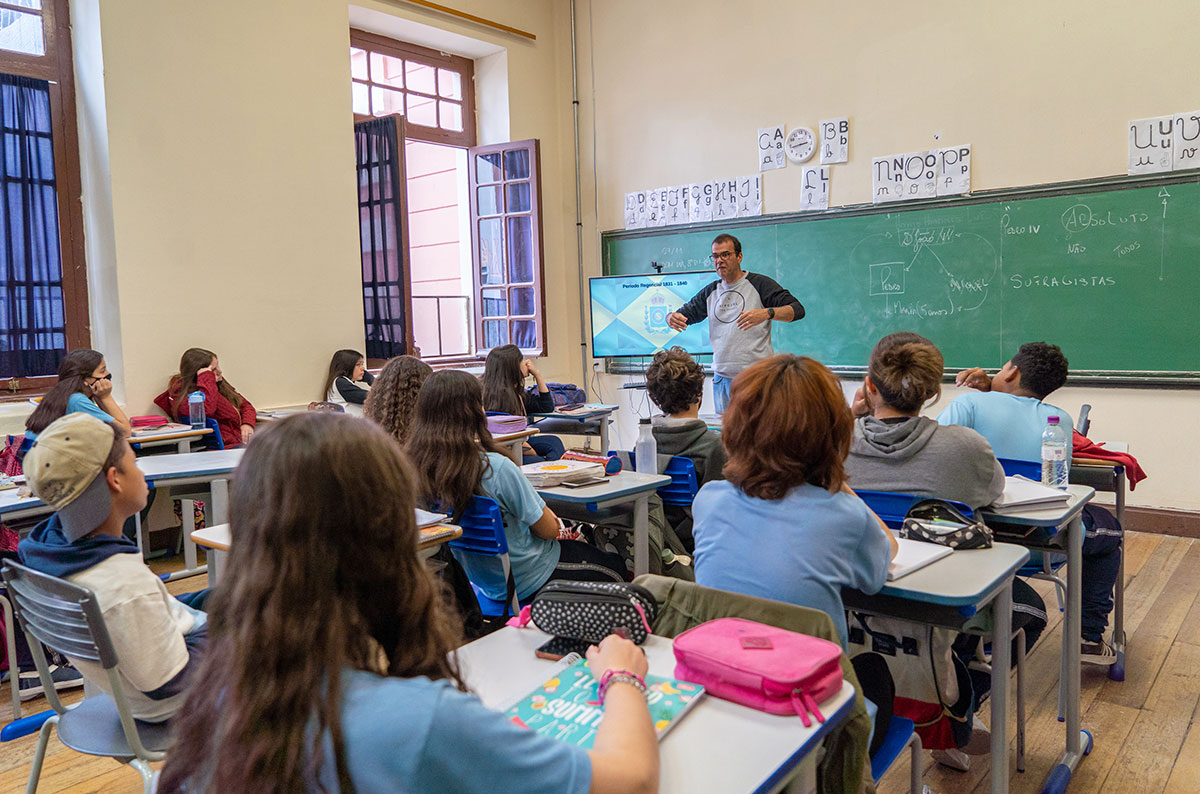
In 2025, Brazil had 46.6 million people aged 15 to 29 years. Among them, 16.6% were employed and studied in regular education, or attended some professional qualification course; 17.5% were not employed, were not studying or qualifying; 25.0% were not employed, but were studying or qualifying; and 40.8% were employed, neither studying nor qualifying. It is worth highlighting the reduction of 4.9 p.p. in the percentage of people aged 15 to 29 years who were not employed, were not studying and were not qualifying, which reached 22.4% in 2019. In absolute numbers, this contingent fell from 11.0 million in 2019 to 8.2 million in 2025, a reduction of 25.9% in the period. Compared to 2024, when 18.2% of young people in Brazil were in that condition, there was a reduction of 0.7 p.p.
22.8% of young women were not employed, studying or qualifying
Among women aged 15 to 29 years, 22.8% were not employed, studying or qualifying, while, among men, this percentage was close to half: 12.4%. The proportion of young women in this condition in 2025 decreased by 5.7 p.p. compared to 2019, when it was 28.5%. In the same year, the percentage of young men who were neither working nor attending school or qualifying was 16.4%, which shows that there was a reduction, but gender differences in this indicator remain significant. From 2024 to 2025, the number of women who were not employed, studying or qualifying decreased by 6.3%, the equivalent of 350 thousand fewer women in this condition.
On the other hand, 27.0% of women and 23.0% of men were just studying or qualifying in 2025, while 32.7% of women and 48.7% of men were just working.
One out of five young black or brown people did not study and were not employed
The percentage of young black or brown persons (19.8%) who were not studying and were not employed or qualifying was 5.8 p.p, higher than that of young white persons (14.0%) in the same condition. The proportion of young white persons who only studied (26.6%) was 2.7 p.p. higher than that of young black or brown persons (23.9%) in the same condition.
Despite the inequality, there was a reduction of 5.9 p.p. in the proportion of young black or brown persons who were neither employed nor studying, from 2019 (25.7%) to 2025 (19.8%). Compared to the proportion found in 2024 (20.8%), the reduction was 1 p.p.
In 2025, nearly 19.7% of young white persons worked and studied, a percentage of 5.0 p.p. higher than that of young black or brown persons (14.7%) in this condition. The percentages of young white persons and black or brown persons who only worked were similar: 39.6% and 41.6%, respectively.
15.6% of all higher education students attend technological courses
In 2025, among the 9.7 million undergraduate higher education students in Brazil, 1.5 million attended technological courses, which corresponds to 15.6% of the total number of higher education students. In 2016, this percentage was 10.5%.
Among self-declared white people who attend higher education, 15.7% choose a technological degree, while the percentage among black or brown people was 15.5%. The same percentage similarity in the choice of technological courses does not occur between men (20.6%) and women (12.1%).
8.8% of high school students attend technical or regency courses
In 2025, of the 8.9 million high school students in Brazil, 8.8% attended a high school technical course or a regency course (for training teachers in early childhood education and the initial years of primary school) compared to 7.0% in 2019. The number of persons attending technical secondary education reached 787 thousand persons, 21.5% more than in 2019, when 648 thousand persons attended this type of course.
From 2019 to 2025, the increase in the proportion of persons attending a secondary technical course or a regency course (teaching) was greater among women: 2.1 p.p., rising from 7.0% to 9.1%. In absolute values, this growth was 24.1%. For males, the proportion was 8.6% in 2025, an increase of 1.6 p.p., in the period. In absolute numbers, there has been an increase of 18.8%, or 60 thousand more men since 2019.
Among white persons, 326 thousand persons attended technical or regency secondary education (teaching) in 2025, 20.3% more than in 2019 (271 thousand). Participation in this course among white persons grew by 1.8 p.p., going from 7.7% in 2019 to 9.5% in 2025. Among black or brown persons, the contingent rose from 368 thousand to 456 thousand students from 2019 to 2025, an increase of 23.9%, resulting in an increase of 1.9 p.p. in participation in technical or regency (training) secondary education, which represented 8.4% of the total number of black or brown persons in secondary education in 2025.
24.8 million attended some professional qualification course
In 2025, the population aged 14 and overreached 174.1 million, and 14.2% of them (or 24.8 million) attended some professional qualification course. The higher the level of schooling, the greater the incidence of previous attendance at a professional qualification course: among those who had no education until complete primary education, the percentage was 5.9%; those with incomplete secondary education to incomplete higher education, 17.3%; and, finally, 23.1% of those with completed higher education had already attended a professional qualification course.
In 2025, the other private institution category, which has historically been the main location for professional qualification courses, was chosen by 46.7% of students. National Learning Services accounted for 21.9%, while 18.2% of students took the course at a public institution, and 13.2% at the enterprise where they worked. In 2024, these percentages were: 47.2% attended professional qualification courses in other private institutions; 21.5%, in a National Learning Services institution; 18.5%, in public institutions; and 12.8%, in the enterprise where they worked.