
Continuous PNAD
Know the methodology and how Continuous PNAD works


February 26, 2026 11h15 AM | Last Updated: March 12, 2026 12h32 PM
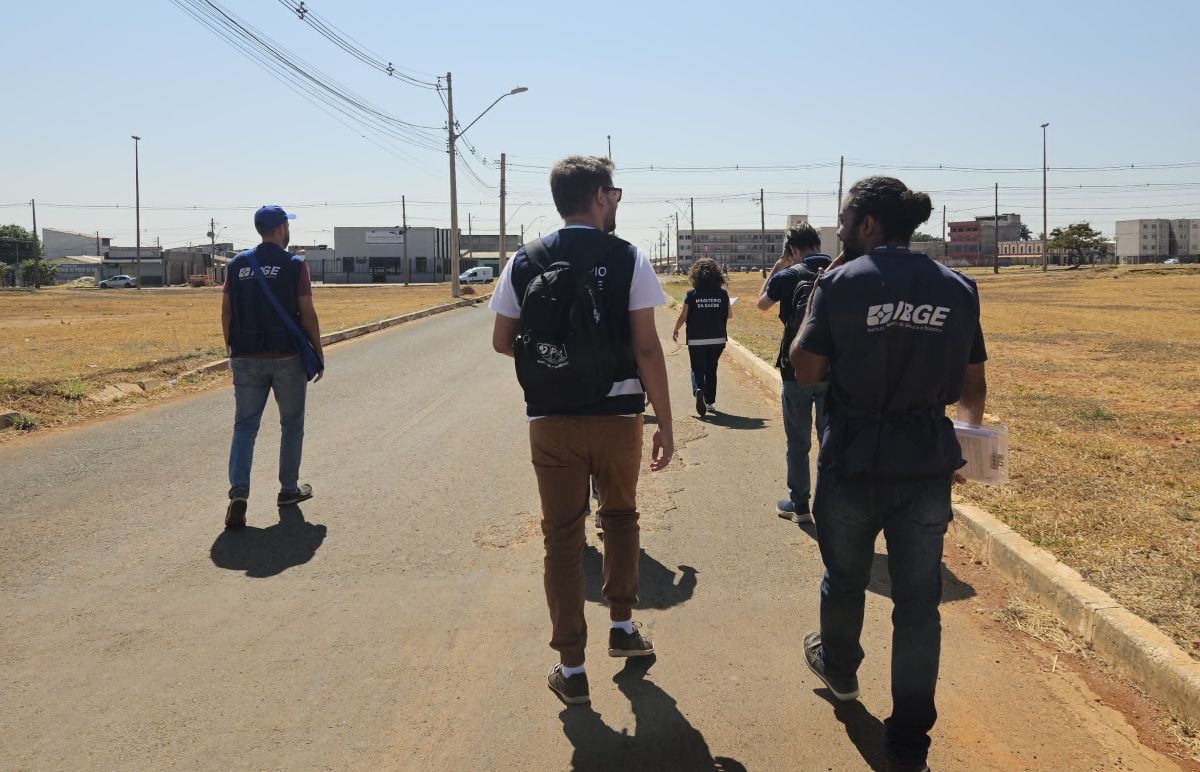
Do you know what Continuous PNAD is? The acronym could be one more, among many others, which are in our daily lives. But it refers to one of the surveys of the Brazilian Institute of Geography and Statistics (IBGE) that goes to Brazilians' homes every month and provides a socioeconomic portrait of their homes.
Continuous National Household Sample Survey: this is its full name. It aims to monitor quarterly fluctuations and the evolution, in the short, medium and long term, of the workforce and other information necessary for the study of the Brazilian socioeconomic development.

Adriana Beringuy, coordinator of Household Sample Surveys, explains the importance of the population knowing the work of the IBGE. “The Population Census is carried out every ten years and investigates all households in Brazil. Yet, the IBGE carries out a number of permanent surveys. Among them, the most important for monitoring the labor market: the Continuous PNAD,” highlights her. “Because, if we depended solely on the Census, we would go up to ten years without updated information on unemployment, employment, income and informality. The Continuous PNAD allows us to monitor, quarter by quarter, the dynamics of the Brazilian labor market,” continues her.
The Census brings results for all municipalities, while the Continuous PNAD brings results with high frequency and quality for states and Brazil. They are complementary surveys, not competing.
The IBGE follows the recommendations of the International Labor Organization, defined at the 19th International Conference of Labor Statisticians, in 2013. It ensures international comparability.
Check out some frequently asked questions about the survey:
- Who is considered employed?
A person who performed paid work in the reference week, even if for just one hour, is considered employed. Family workers who helped with economic activity are included as well. It seeks to capture all forms of insertion in the labor market, from the most precarious to the most formalized.
- And who is considered unemployed?
Everyone who was not working, effectively looked for work in the last 30 days and was available to work.
- What about app drivers and delivery people?
In most cases, they are classified as self-employed workers. This is because they organize their journey, can work on various platforms and are paid per task, and can decide which clients to serve.
-Only those who have a formal contract in the private sector are formal?
No. They are also formal employees in the public sector, self-employed workers with CNPJ, employers with CNPJ and domestic workers with a formal contract.
- And whoever receives Bolsa Família is considered employed?
No. Receiving the benefit does not affect the classification. Persons will be considered employed, unemployed or out of the workforce depending on their work situation.
- Why is the unemployment rate different from the workforce underutilization rate?
The ILO's international methodology defines different indicators to measure the workforce. The unemployment rate, widely used by countries, measures the pressure in demand for work in the reference period and allows for greater international comparability. On the other hand, the underutilization rate can expand the diagnosis by capturing other forms of insufficient labor insertion (time-related underemployed persons and the potential workforce). Although the unemployment rate is different from the underutilization rate, this does not make it “truer” or “less true.” The IBGE produces and publishes both of them, and they can be analyzed in a complementary way.