
PNAD Contínua Mensal
In the quarter ending in March, unemployment increases to 6.1%


April 30, 2026 09h00 AM | Last Updated: May 01, 2026 08h05 PM

The unemployment rate in the moving quarter ending in March 2026 increased to 6.1%, a growth of 1.0 percentage points (p.p.) from the quarter October-December (5.1%), but stood 0.9 p.p. below that in the quarter ending in March 2025 (7.0%). The data come from the Continuous National Household Sample Survey (Pnad), released today by the IBGE. Despite the increase in the monthly comparison, this was the lowest unemployment rate for a quarter ending in March, throughout the survey time series, which started in 2012. Also, since the quarter ending in May 2025 this indicator had not exceeded 6.0%.
The unemployed population reached 6.6 million, with an increase of 19.6% in the quarter, or 1.1 million persons in search of work. In the annual comparison, a cohowever, the number of persons searching for work decreased 13.0% (987 thousand persons).
The total number of workers in the country stood at 102.0 million, with a drop of 1.0% (1.0 million) in the quarter, but remaining 1.5% (1.5 million employed persons) above the total registered in the same moving quarter of 2025.
Trade, Public Administration and Domestic Services lose jobs
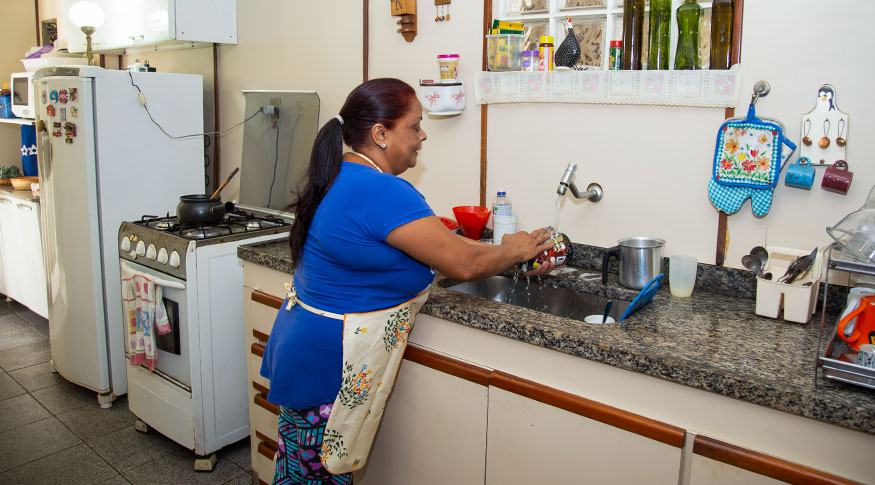
From the previous quarter, there was no increase in the number of employed persons in any of the ten groups analyzed by IBGE's Continuous PNAD, and, in three of them, there were drops: Trade (1.5%, or 287 thousand employed persosn), Public administration (2.3%, or 439 thousand persons) and Domestic services (2.6%, or 148 thousand persons). Together, these tree groups lost more than 870 thousand jobs, also in the quarterly comparison.
In spite of these drops, two groups recorded increases in the number of employed persons against the same quarter a year ago: Information, Communication and Financial, Real Estate, Professional and Administrative Activities (3.2%, or 406 thousand persons) and Public administration (4.8%, or 860 thousand persons). In this annual comparison, only Domestic Services recorded a decrease (3.6%, or 202 thousand persons).
According to Adriana Beringuy, IBGE coordinator of household sample surveys, “the reduction of the number of workers was observed in a number of activities that have this typical behavior, due to either a trend to reduction in Trade in this period of the year or to the dynamics of temporary contracts coming to an end in activities related to Education and Health in the public municipal sector.”
Informality drops in the two comparisons
In the quarter ended March, the informality rate was 37.3% of the employed population, which is equivalent to 38.1 million informal workers. This indicator was below the 37.6% (or 38.7 million informal workers) listed in the previous moving quarter, as well as the 38.0% (or 38.2 million informal occupations) of the quarter ended March 2025.
The number of workers with a formal contract in the private sector (except domestic workers) stood at 39.2 million, without significant changes in the quarter, but increasing 1.3% (or 504 thousand persons with a formal contract) in the year. The number of workers without a formal employment contract in the private sector decreased 2.1% (285 thousand persons) in the quarter, reaching 13.3 million. In the annual comparison, this indicator did not record a statistically significant change.
The number of self employed workers was stable in the quarter, and remained at 26.0 million. In the annual comparison, there was an increase of 2.4%, or 607 thousand self-employed persons more. According to the IBGE analyst, “the reduction observed in the number of informal workers resulted from the retraction in the number of workers without a formal contracr in the private sector and self-employed workers without a CNPJ number.”
Wage bill of workers hits new record: R$ 374.8 billion
The real average wage bill, that is, the total compensation of workers in the country, hit a new record in the quarter ended March: R$ 374.8 billion with stability in the quarter and an increase of 7.1% (or R$ 24,. billion) in the year.
The average real wage bill of workers hit a new record, R$ 3,722 and increased in both comparisons: 1.6% in the quarter and 5.5% in the year, not considering inflation in the two periods. Against the previous moving quarter, there was an increase in average yield of two of the ten grouos of activities studied by Continuous PNAD: Trade (3.0%, or R$ 86) and Public Administration (2.5%, or R$ 127). The other groups did not record significant changes.
Adriana Beringuy observes that “income grew in activities that reduced the participation of informal workers or formal workers with lower incomes in their workforce. Thus, relative to the quarterly comparison base with a higher proportion of informal employment, the average income from current work registered an increase.”
More about the survey
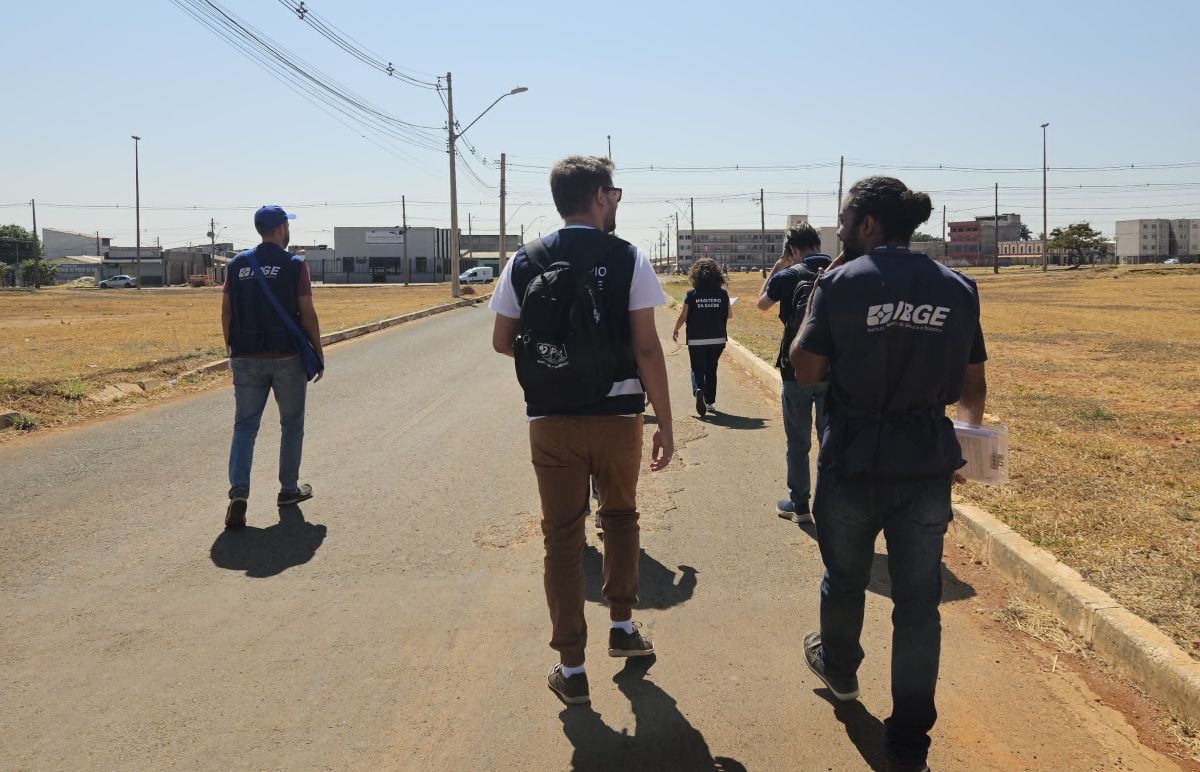
Continuous PNAD is the main survey on workforce in Brazil. Its sample includes 211 thousand households, spread over 26 states and the Federal District, which are visited every quarter. Nearly two thousand interviewers work in the survey, integrated with more than 500 IBGE branches in the entire country.
Due to the Covid-19 pandemic, the IBGE implemented data collection by telephone on March 17, 2020. In July 2021, face-to-face data collection was resumed.
The identity of the interviewers can be confirmed at the Answering the IBGE website or through the Call Center (0800 7218181), and their ID numbers can be requested by the informants.
See the results of Monthly Continuous PNAD on Sidra. The next release, relative to the quarter ending April, will be on May 28.
Learn more about the Monthly Continuous National Household Sample Survey :
What is Continuous PNAD?
Time Series
Tables
Publications