
Work Plan
In Paraná, IBGE presents Work Plan for 2026 with a focus on sovereign database management


January 22, 2026 05h28 PM | Last Updated: January 26, 2026 03h45 PM

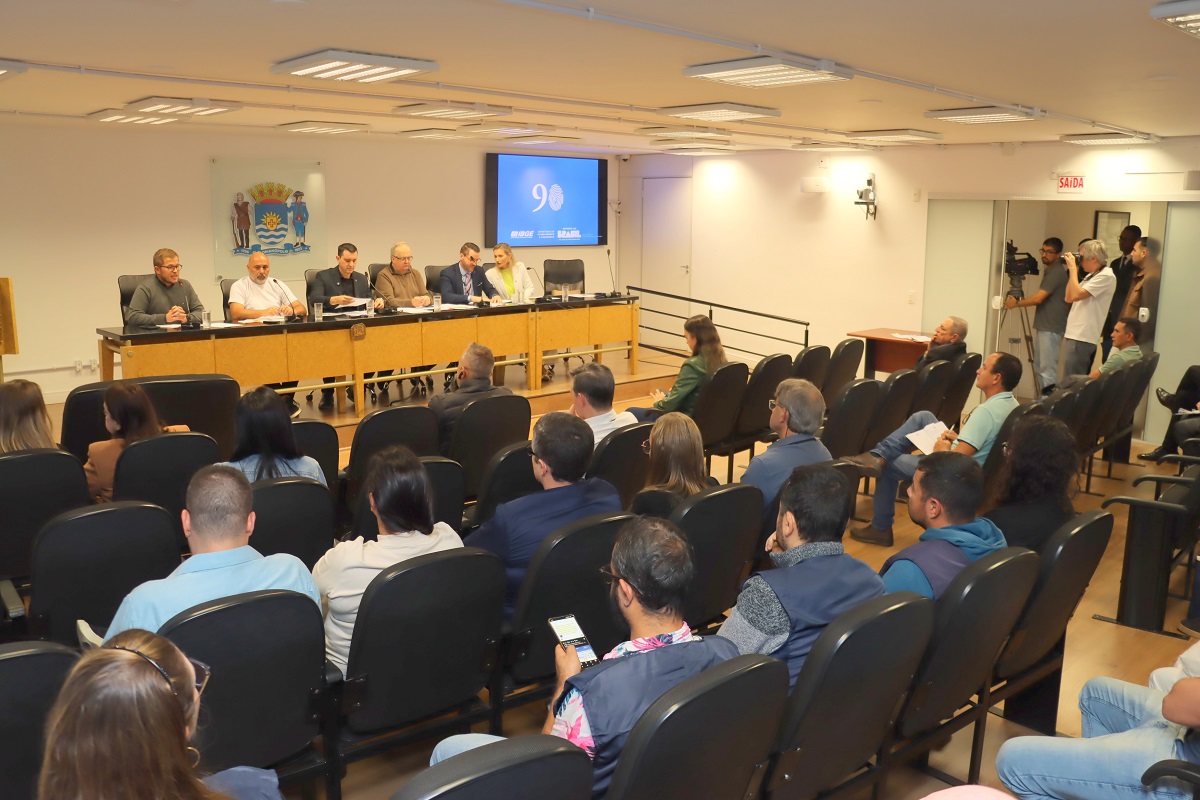
Sovereignty in databases, with the use of open-source software platforms and creation of envinronments for cooperation with public managers are some of the pillars in the information technology field found in the Work Plan for 2026 of the Brazilian Institute of Geography and Statistics (IBGE), which was presented today (22/01), in Curitiba (PR), at the Institute's State Superintendency.
This is the third in a series of five regional events that have detailed aspects of the IBGE Work Plan for 2026. On Tuesday (20), the work plan was presented in São Francisco do Conde (BA) and on Wednesday (21), in Brasília (DF). The next edition will be held in Belo Horizonte (MG), on Friday (23), with a highlight to projects of the Directorate of Surveys. The last meeting will be on Monday (26/01), in Macapá (AP), about actions related to the Work Plan for the Directorate of Geosciences.
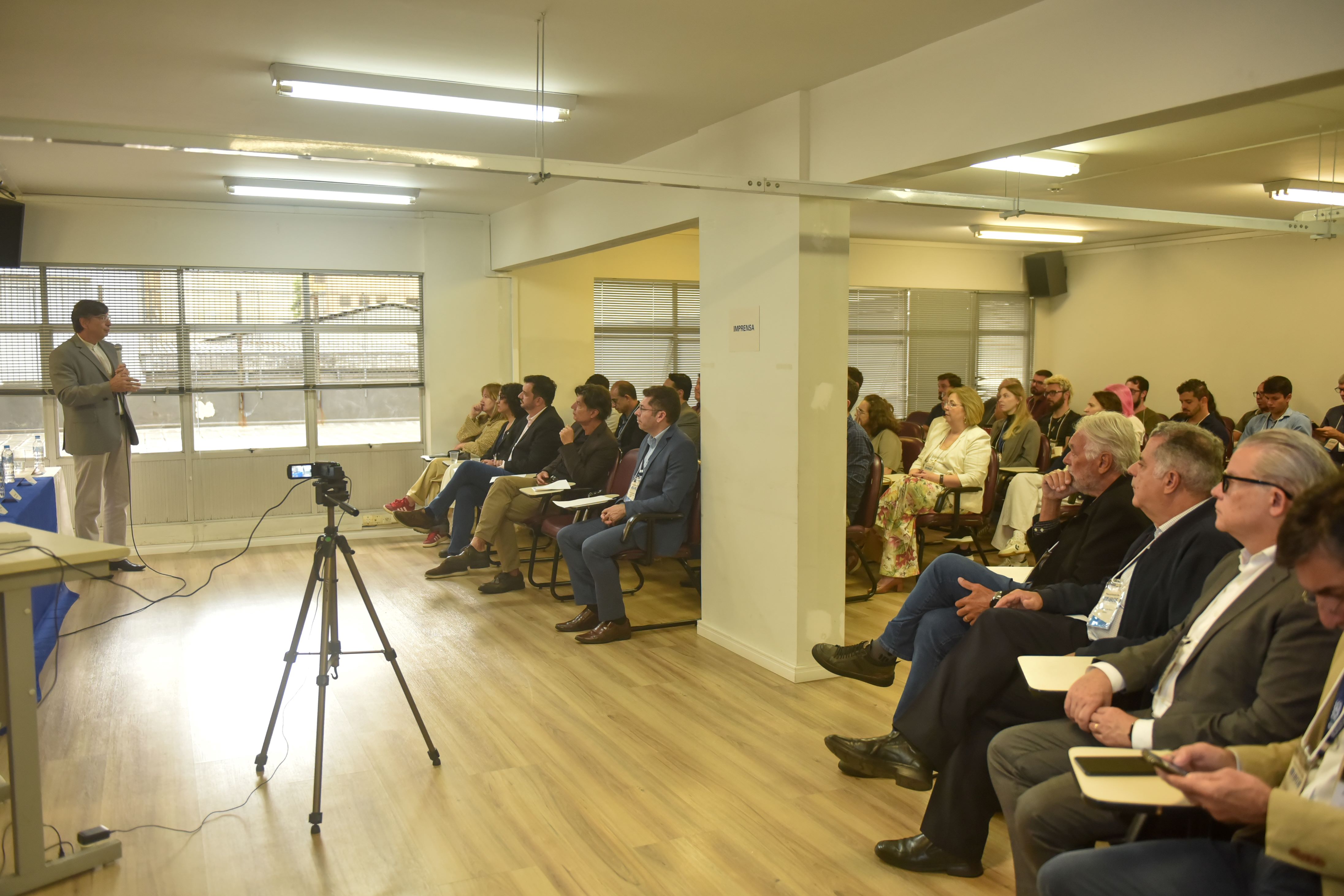
According to Marcos Mazoni, IBGE Information technology directos, besides supportin the work of about 340 surveys conducted by the IBGE every year, the directorate will have as a priority the development of structures and partnerships to the Institute to guarantee the sovereignty of its informations and systems: “Today the IBGE has its own technology structure and reached a point of strain in its service capacity due to increasing demands. Clearly, the introduction of new technologies should be considered in this process.”
The first application is already underway: the use of the sovereign cloud of the Federal Data Processing Service (Serpro) for data storage, with replication in the cloud from a provider that works with open databases and is not under the control of other countries. “The contract with Serpro aims to meet our needs, but not by relying on traditional suppliers, but rather on the Brazilian State's own structure, which will allow us continuity in technical and financial aspects,” explains Mazoni.
Another point is the migration of internal data communication circuits to Telebras' long-distance data transmission system. “The communication of IBGE's protected data will be in Telebras' cloud, within the communication and protection systems of a public company. This reduces malicious traffic and will speed up our circuits. The process has just begun, with the signing of the contract with Telebras, and we should complete all migrations by the end of February,” the director explains.
The work plan also includes the creation of cooperative environments with public managers, using open-source software platforms. This innovation will enable more appropriate use of IBGE data for public policies throughout the country, emphasizes Mazoni: “There are inequalities between states in the capacity to generate and manage public policies in Brazil. Often, new information is available, but they lack the capacity to use this information. Therefore, we will have to create tools, based on the logic of free information, that can be replicated and reused, with open-source and replicable code.
In the presentation, Mazoni also spoke about access to databases from other agencies and ministries so that the IBGE can improve its research and verification tools through cross-referencing information.
To supports projects developed by the Directorate of Technology and Information (DTI), Marcio Pochmann, president of the IBGE, Marcio Pochmann, emphasized that it is no longer possible for the IBGE to make huge investments in technology during census periods only, because technological structures require constant attention. An important step is recognizing that today 80% of the companies that process national data are located abroad. In this respect, the president of IBGE advocates for efforts to ensure that the institute's data will remain under the custody of national and public companies.
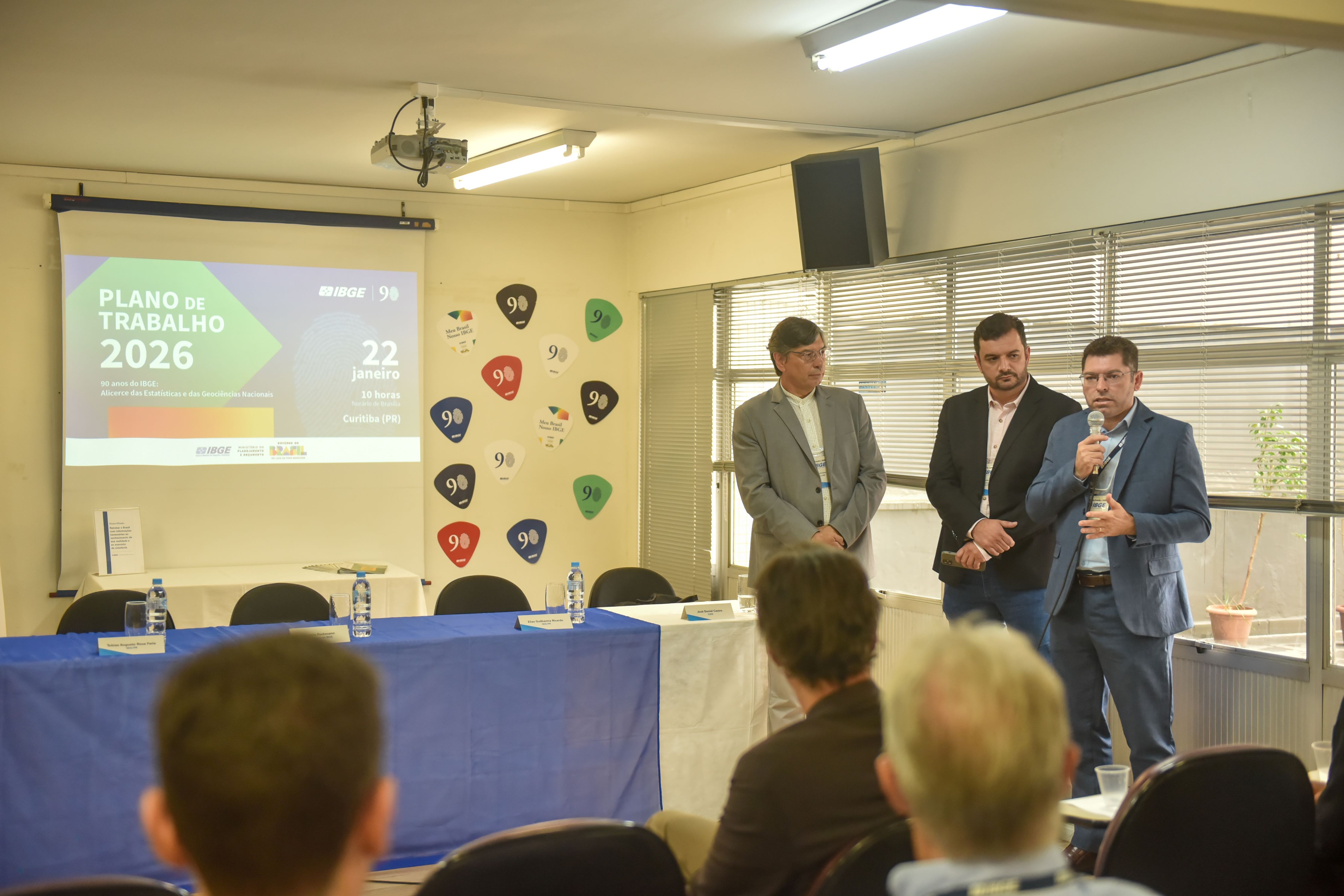
Other participants at the event were the dean of the Federal University of Paraná (UFPR), Marcos Sunye; the future IBGE State Superintendent in Paraná, Tobias Augusto Rosa Faria, who has been recently approved for this position; and the current superintendent, Elias Guilherme Ricardo.