
International Relations
In 2025, IBGE's international insertion sought to improve processes and methods of statistical and geoscientific production


January 16, 2026 01h29 PM | Last Updated: January 19, 2026 03h39 PM
The year 2025 was one of much work and responsibility for the international relations area of the Brazilian Institute of Geography and Statistics (IBGE). Among the activities carried out during this period, the highlight was Brazil's presidency of BRICS and MERCOSUR, which gave the IBGE the responsibility of chairing the Group of Heads of Statistical Institutes of BRICS and the Specialized Meeting on Statistics of MERCOSUR. On these occasions, proposals were approved for the creation of a secretariat and working groups to improve the processes and methods of work in statistical and geoscientific production. Another important challenge was the organization of the Triple International Forum on Governance in the Global South, which brought together representatives of the national statistical institutes of BRICS countries, MERCOSUR, and the Community of Portuguese-Speaking Countries (CPLP), with which the IBGE actively collaborates.
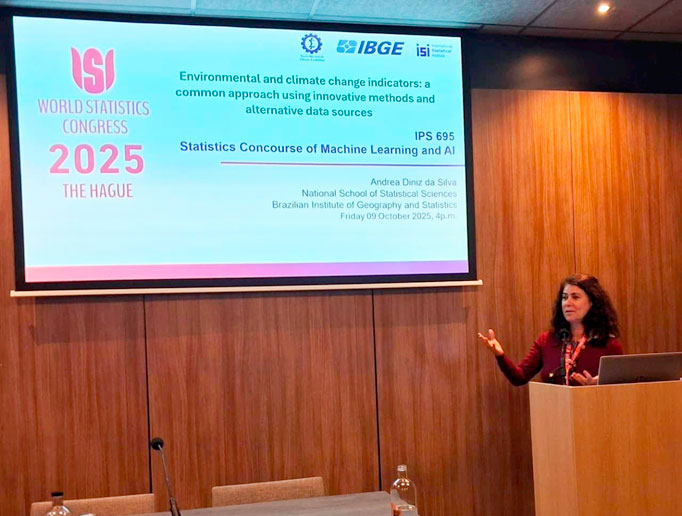
“In the international arena, in 2025, the IBGE worked on four fronts: participation in statistics and geosciences forums, technical cooperation, addressing demands from international organizations and other partners, and organizing international events,” summarizes Andrea Diniz, IBGE head of International Relations, adding that the IBGE participated in person in 57 international events and in 122 working groups in international organizations such as the United Nations (UN), the Organization for Economic Cooperation and Development (OECD), the World Bank, the International Labour Organization (ILO), and the UN Economic Commission for Latin America and the Caribbean (ECLAC). “The IBGE is already a benchmark in the adoption of best practices in statistical production, but we have expanded our presence in forums on the modernization of official statistics, on the use of new data sources, and on the integration between statistical and geospatial information,” claims Ms. Diniz.
According to the IBGE head of International Relations, the Institute's international engagement included participation and, in some cases, leadership in groups aimed at "improving the monitoring of each of the 17 Sustainable Development Goals of the UN's 2030 Agenda and 13 groups of the Statistical Conference of the Americas, holding a prominent position in the UN Expert Group on the Integration of Statistical and Geospatial Information - Co-Chairmanship, in the Regional Committee - UN-GGIM: Americas - Vice-Chairmanship; Group for Diagnostic Sampling Framework for Agricultural Surveys of the CEA/ECLAC – Coordination, in the Cartography Commission of the IPGH – Chairmanship, in the Group of Heads of State Statistics of the BRICS – Secretariat, in the MERCOSUR Specialized Statistics Meeting – Secretariat, in the Reference Center in Africa for Electronic Data Collection – Technical Committee and Management Committee and in the Division of Portuguese-Speaking Countries (CPLP) of the UN Expert Group on Geographic Names – Chairmanship".
"The growing presence of the IBGE abroad shows that Brazilian statistical and geoscientific production is gaining increasing relevance, credibility, and voice on the international stage," highlights the president of the IBGE, Marcio Pochmann.
Another ongoing activity of the IBGE is collaborating with international organizations and national statistical institutes by reviewing technical documents and answering international and peer inquiries. In 2025, the IBGE answered 40 inquiries and reviewed and commented on 104 documents, mostly from the UN System and other international partners. In addition to providing raw data, this set of activities included strategic consultations on new methodologies, such as the "Beyond GDP" survey, and revisions to the classification of international trade. "By promptly responding to these 40 requests, which also involved partners such as the Chilean National Statistics Institute (Chile's NSO) and the International Labour Organization (ILO), the IBGE ensured the sovereignty of national information, preventing external estimates from replacing official data produced in the country," emphasized the head of the International Relations Office.
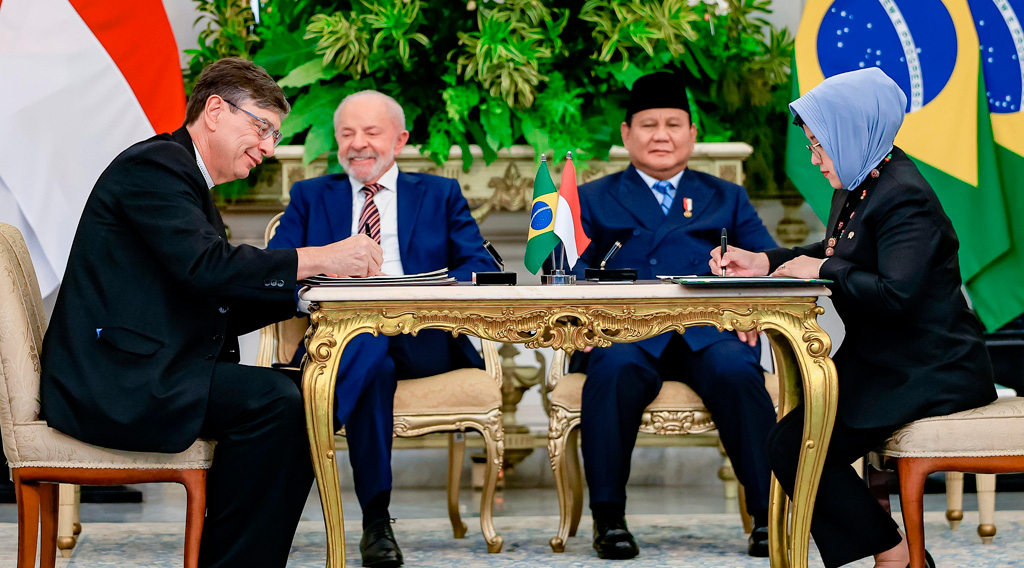
The IBGE also participated in technical and academic missions with agreements signed with national statistical institutes, international organizations, universities, and research centers in different regions of the world: there were 16 technical visits and the signing of six technical cooperation agreements, in addition to the execution of seven agreements signed in previous years, in the modalities of memorandum of understanding, protocol of intentions, convention, and technical cooperation agreement. “Beyond the technical visits carried out and received, there are internships, census observations, and field training, which strengthen institutional capacities, allow for the adjustment of methods to diverse contexts, and deepen bilateral and multilateral South-South cooperation. These actions, together, consolidate the IBGE as a global technical reference and expand its contribution to more robust, integrated statistical systems oriented towards international development agendas, especially those of the Global South,” states Ms. Diniz.
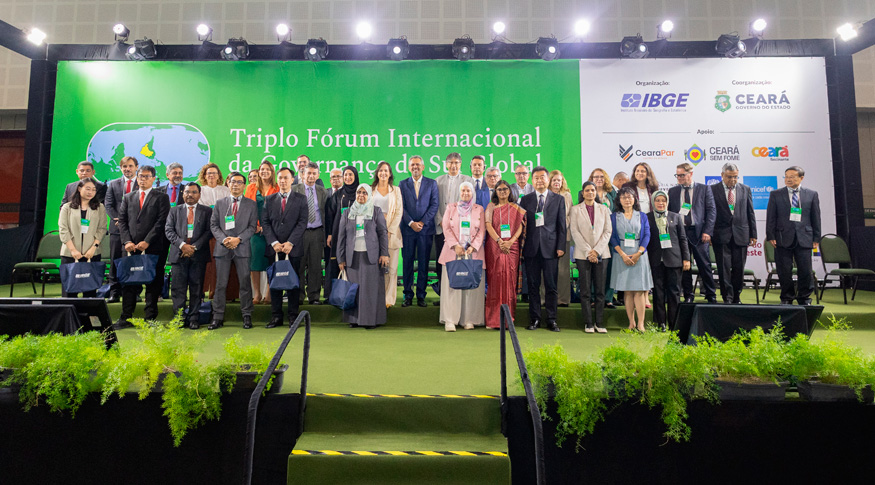
To broaden the scope of exchanges with the statistical and geoscientific communities, both technical and academic, the IBGE organized the Triple International Forum on Global Governance, which brought together more than 5,000 people in person and approximately 15,000 connected via the internet to discuss new indicators and strategic themes for development and sustainability in the digital age. This initiative complements BRICS and MERCOSUR meetings, panels at national and international events, workshops, and webinars that, due to their remote format, allow for the participation of a diverse audience, totaling 24 international events organized throughout the year.
“IBGE's work on international engagement is constant. Our actions reinforce the institutional commitment to global cooperation, methodological transparency, and alignment with international best practices in the production and dissemination of information,” concludes Ms. Diniz.