
90 years
The making of a Brazil expressed in numbers


May 28, 2026 10h00 PM | Last Updated: June 08, 2026 05h29 PM

In Brazil, initiatives aimed at organizing statistical services have been undertaken since the time of the Empire: the first official statistical institution was created on January 14, 1871, under the name of General Directorate of Statistics – DGE. This body was responsible for conducting population censuses (the first of which occurred in 1872), preparing maps of civil registries, organizing data produced by other departments, as well as formulating statistical plans for the provinces.
Dissolved in 1881 due to budget cuts, it was re-established in 1890 under the republican regime. Although the DGE, a federal agency, had operated continuously throughout the First Republic, the statistical activities during this period were characterized by a decentralized structure, with each state having its own departments and services, based on diverse practices, methodologies, and objectives.
Starting with the first government of President Getúlio Vargas, efforts to reorganize statistical services in the country became evident. Statistical departments were created in five ministries to promote the gathering and organization of information produced by federal, state, and municipal agencies. After this initial rearrangement, actions converged towards a new type of institutional framework, based on cooperation between the Federation Units and the Federal Government.
The model was largely conceived by Mário Augusto Teixeira de Freitas, the main figure among IBGE founders. The experience, which proved successful immediately, encouraged the government to adopt the inter-administrative solution as a benchmark for achieving a National Statistical System (SEN).

On July 6, 1934, the National Institute of Statistics (INE) was created, a federal agency tasked with promoting the coordination, rationalization, and standardization of statistical services in Brazil. Its effective establishment, however, would occur approximately two years later, on May 29, 1936, with the indication of the institution's first president, José Carlos de Macedo Soares. Teixeira de Freitas, a central figure in this process, was appointed as its Secretary-General. The legal authority and administrative organization of the INE were made possible after the ratification of the National Statistical Convention on August 11, 1936, by which the Federation Units voluntarily adhered to a statistical information system, agreeing with the technical subordination of their departments to a coordinating body. The competence to promote the superior guidance and direction of the INE's activities was attributed to the National Council of Statistics (CNE), the decision-maker of the emerging system.
The reorganization of the Brazilian State in the post-1930 period also demanded the advancement of knowledge about the national territory, which involved its measurement, description, and control. Just like statistical data, geographic, cartographic, and geodetic information were also used as raw materials applied to the decision-making process and public policies.
Therefore, on March 24, 1937, the Brazilian Council of Geography – CBG – was created, an autonomous body integrated into the INE (National Institute of Statistics), whose responsibilities included coordinating studies on the Geography of Brazil and promoting the articulation of official and private geographic services. The following year, the body received a new name, becoming the National Council of Geography – CNG. The same legal act transformed the INE into the Brazilian Institute of Geography and Statistics – IBGE, ratifying in the very name of the agency the union between both fields.
It is important to highlight the unique nature that the IBGE assumed at the time of its creation. Firstly, because it was a federal agency directly linked to the Presidency of the Republic, unlike others, which were part of the structures of ministries. And secondly, because it did not act primarily as an institution that produced statistical and territorial information, but rather as a coordinator of two information systems that were to function in an integrated manner. It was, therefore, a kind of association of related bodies, a collegiate body responsible for the organization, technical guidance, and formulation of operating guidelines for decentralized services, classified as essential to national interests.
The remainder is temporarily in Portuguese.
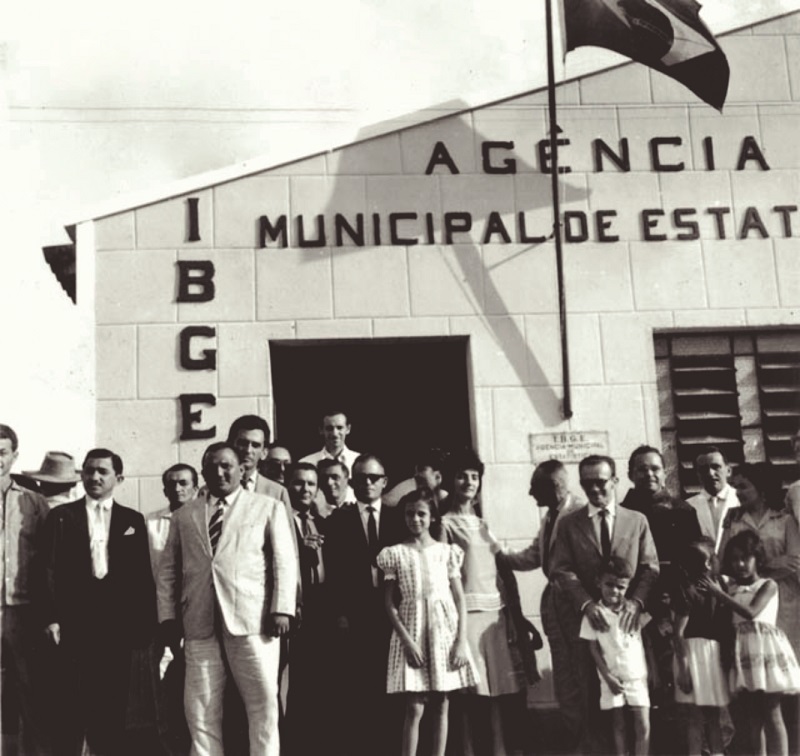
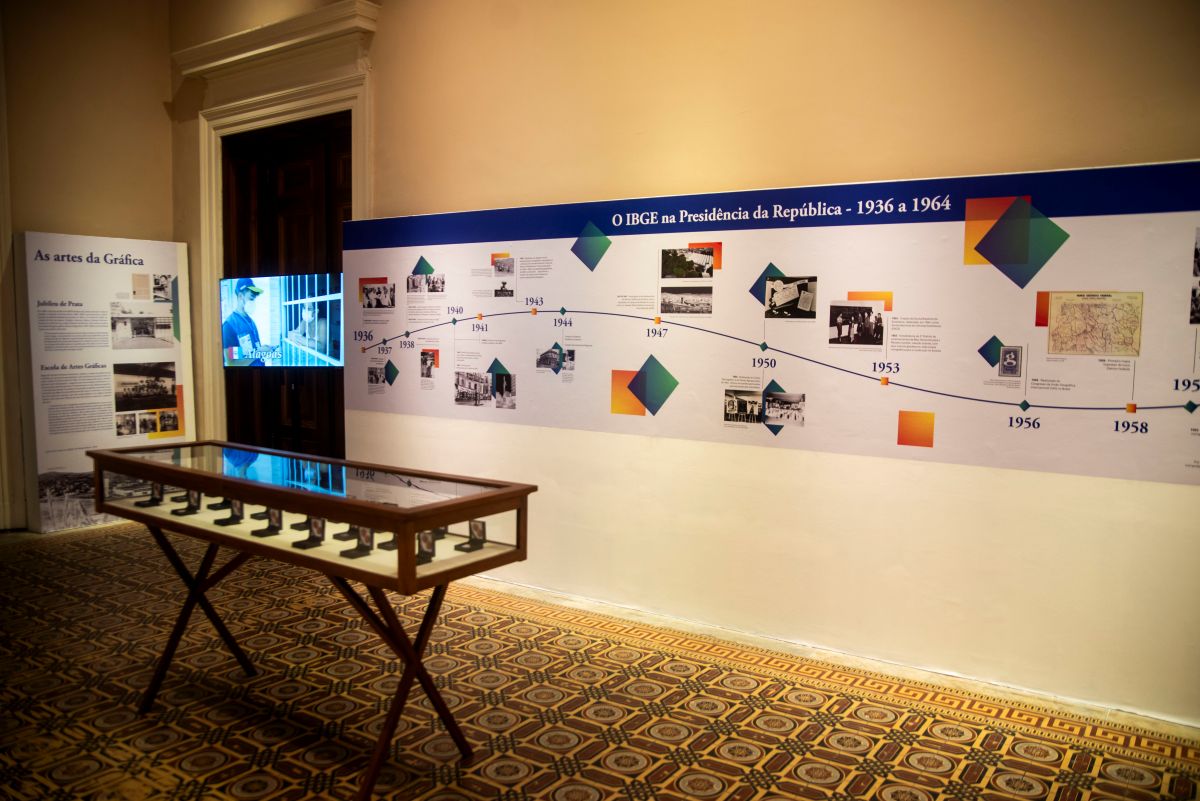
Having established its foundations in the 1930s, the following decade marked a period of expansion and consolidation for the IBGE. In 1940, the agency conducted its first Census (General Enumeration of Brazil 1940) in a context marked by the outbreak of World War II, in which statistical and territorial information proved strategic to the imperatives of National Security. This operation is considered a landmark in the history of national statistics, inaugurating a new working model with modern methodological standards that created conditions for a more detailed investigation into the social reality of the country.
From 1942 onwards, the National Agreements on Municipal Statistics were signed, forming the basis for the creation of Municipal Statistical Agencies, information-collecting departments. In 1944, the Regional Inspectorates of Municipal Statistics were created, representing the IBGE in each Federation Unit. At the same time, the so-called "geographical expeditions" began, survey missions aimed at the recognition, description, and study of the national territory. Another highlight of the period was the structuring of the Brazilian Geodetic System – SGB, under the leadership of Allyrio Hugueney de Mattos.
From the mid-20th century onwards, the unfolding of the industrialization process and the progressive diversification of the Brazilian economy began to impose increasingly large demands on the IBGE for statistical information, especially economic information. In this context, throughout the 1950s and 1960s, debates intensified regarding the IBGE and the SEN (National Statistical System) to meet these new demands. During that period, the IBGE participated in numerous debates and discussions aimed at its insertion into the larger national process that sought to create the basis for national development, starting from economic and social planning. However, the most significant interventions were carried out at the end of the 1960s, driven by a broader reform of the federal Public Administration.
On February 13, 1967, the IBGE was transformed into a public law foundation, with its own legal personality and administrative and financial independence. The IBGE Foundation was initially composed of three autonomous bodies: the Brazilian Institute of Statistics – IBE; the Brazilian Institute of Geography – IBG; and the National School of Statistical Sciences – ENCE. Later, in 1971, a fourth body was created, the Brazilian Institute of Computer Sciences – IBI, responsible for processing the data necessary for the institution's activities and for automating access to information.
In the 1970s, this structural reform was further deepened, giving new meaning and functionality to IBGE's activities. If, since its creation, the body had acted as a coordinating instance of an information system, under the new model it was transformed into an agency that produced that same information.
In addition to producing primary statistics—information obtained from processing responses to surveys conducted with individuals or organizations—the Foundation was structured to develop derived statistics, that is, those generated by aggregating or cross-referencing variables from primary statistics and other sources of information (indicators and reference systems).
Among the works developed in this new institutional phase, the following stand out: the 1970 Population Census, the carrying out of household sample surveys, the construction of a National Consumer Price Index System, the creation of social indicators, the development of an input-output matrix (which systematized data relating to the main real flows observed in the national economy), as well as the launch of new surveys on basic sanitation, wild-crop harvesting, agriculture, industry, trade and services.
In the field of Geosciences, the so-called "quantitative geography" ratified the union between geographical and planning studies. Also relevant was the formation of an area dedicated to research on natural resources and the environment, as well as the creation, in 1975, of the Roncador Ecological Reserve—renamed three years later as the IBGE Ecological Reserve—conceived as a conservation and scientific research unit on the Cerrado Biome.
With the restoration of democracy in 1985, the IBGE underwent a new process of change. At the beginning of the New Republic, the Foundation was called upon to re-evaluate its principles, functions, and purposes. Efforts were made to implement measures aimed at streamlining activities, decentralizing decisions, modernizing processes, and promoting transparency practices. At this time, a new institutional paradigm emerged, based on the reconstruction of relations between the agency and Brazilian society. The new guideline, which to a large extent recovered the spirit of IBGE's founders who gave a fundamental role to dissemination and information, encouraged the opening of archives and databases, allowing citizens broader and more agile access to information. The IBGE's mission is not limited to the production of statistical and territorial information, but is only completed to the extent that this information reaches users and is absorbed by them, being transformed into knowledge about the Brazilian reality. Thus, dissemination was ratified as a core activity of the IBGE, leading to the creation of the Center for Information Documentation and Dissemination – CDDI.
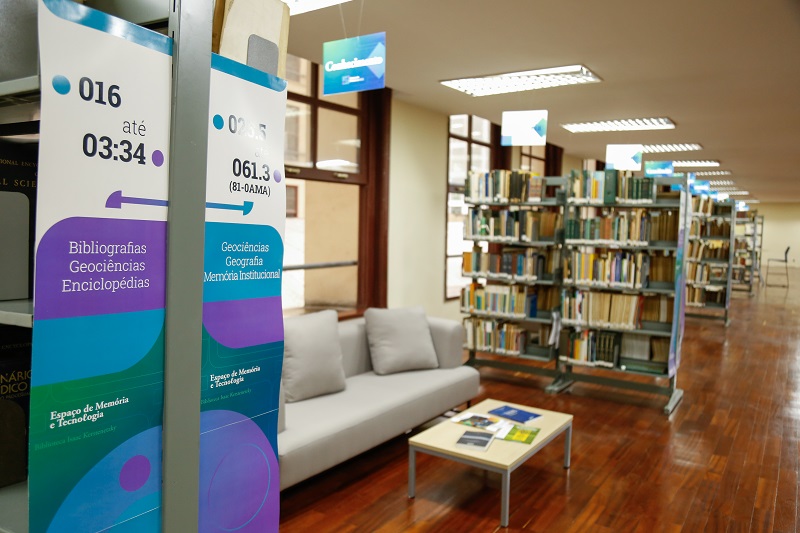
Over the past three decades, institutional efforts have focused on meeting the increasingly complex demands of Brazilian society for information, always ensuring its quality and credibility. A hallmark of the agency's recent work is the pursuit of modernizing its work practices, making use of new technological resources. The first version of the IBGE website was launched in 1995, making the institution one of the first in the country to enter the digital world. Since then, these initiatives have been intensified through the development of new databases and search engines and access tools for users, the use of georeferencing systems, the digitization of bibliographic and documentary collections, the production of diverse digital content, and the institution's engagement with social networks. In 2017, the IBGE News Agency was created, and the Institute began producing journalistic content. At ninety years old, the IBGE remains steadfast in its constant pursuit of excellence.