
IPCA
IPCA of December is 0.33% and cumulative result is 4.26% in 2025


January 09, 2026 09h00 AM | Last Updated: January 13, 2026 04h19 PM
In December 2025, the Extended National Consumer Price Index (IPCA) was 0.33%, above the November rate (0.18%), but lower than that recorded in December 2024 (0.52%). This was the lowest result for a December since 2018 (0.15%). Thus, the country's official inflation index closed the year with an increase of 4.26%, 0.57 percentage points (p.p.) below the 2024 IPCA (4.83%) and below the inflation target (4.5%) established by the National Monetary Council (CMN). This was also the lowest cumulative figure for the year since 2018 (3.75%).
The result of 2025 was mainly influenced by Housing, which accelerated from 3.06% in 2024 to 6.79%, registering the largest impact (1.02 p.p.) in the year-to-date total. In the previous year, the impact had been 0.47 p.p. Following this, the largest changes came from Education (6.22% and 0.37 p.p.), Personal Expenses (5.87% and 0.60 p.p.), and Health and Personal Care (5.59% and 0.75 p.p.). These four groups together accounted for approximately 64% of the year's result.
Fernando Gonçalves, the survey manager, highlights that “this is the fifth lowest result in the series since the Real Plan, that is, in the last 31 years. Before this, we have 1998 (1.65%), 2017 (2.95%), 2006 (3.14%) and 2018 (3.75%)”.
Food and beverages, the group with the greatest share in the index, slowed down when comparing the 2024 result (7.69%) with 2025 (2.95%), especially due to food at home, which went from 8.23% to 1.43%. For six consecutive months (June to November), food at home registered a negative change, accumulating a drop of 2.69%. In the other months, the cumulative increase was 4.23%.
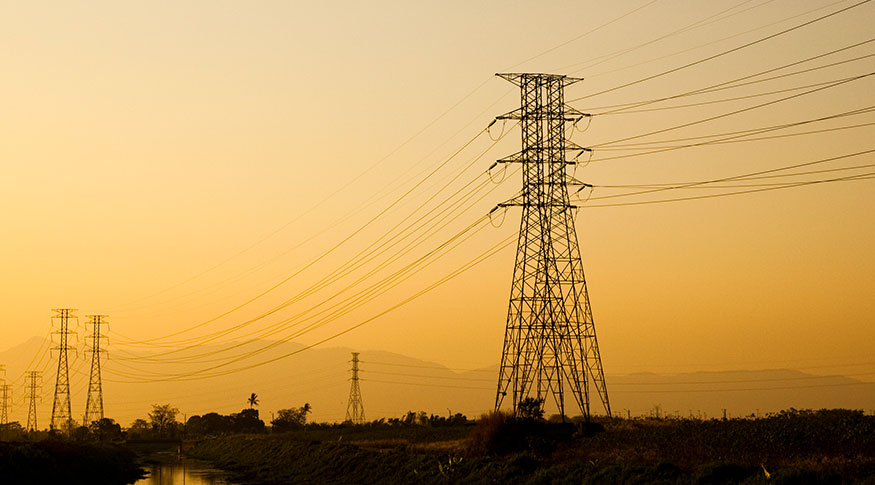
Fernando Gonçalves comments that “in Housing, the share of residential electricity generated an impact of 0.48 percentage points on the cumulative result for the year, due to adjustments that varied from -2.16% to 21.95%, in addition to a greater prevalence of tariff flags burdening consumers' bills, differently from what occurred in 2024 with 8 months of green flag, that is, without additional cost. On the other hand, food at home showed a decrease throughout the year, due to a bigger supply.”
The other groups presented the following results of cumulative fifigures for 2025: Household articles, with a -0.28% change and a -0.01 p.p. impact; Wearing apparel, with 4.99% and 0.23 p.p.; Transportation, with 3.07% and 0.63 p.p.; and Communication, with 0.77% and 0.03 p.p.
Electricity exerted the greatest individual impact on 2025 inflation
Among the 377 sub-items whose prices are considered in the IPCA calculation, residential electricity accounted for the greatest individual impact (0.48 p.p.) on 2025 inflation, with a cumulative increase of 12.31% in the year. In second place were regular courses, with a 0.29 p.p. impact and a 6.54% change; Health insurance, with 0.26 percentage points and 6.42%; residential rent, with 0.22 percentage points and 6.06%; and snacks, with 0.21 percentage points and 11.35%.
Among the price drops, food products stand out: rice registered an impact of -0.20 percentage points in the cumulative total for 2025, with a decrease of 26.56%, and long-life milk contributed -0.10 percentage points, going from an increase of 18.83% in 2024 to a decrease of 12.87% in 2025. Also noteworthy are household appliances and equipment, telephone equipment, and voluntary vehicle insurance, each with an impact of -0.05 percentage points.
“Food prices rose 2.95% in 2025, below the 2024 result, when they registered an increase of 7.69%. With non-food products, the opposite occurred: an increase of 4.64% in 2025 compared to 4.07% observed in 2024,” observes Gonçalves.
In the special aggregate of services, the IPCA accelerated from 4.78% in 2024 to 6.01% in 2025, and the aggregate of monitored prices, that is, those administered by the government, from 4.66% to 5.28%.
Vitória had the highest cumulative inflation over 12 months
Among the 16 locations where the IBGE (Brazilian Institute of Geography and Statistics) monitors prices weekly, Vitória (4.99%) had the highest change in 2025, mainly influenced by increases in residential electricity (17.48%) and health insurance (6.33%). Porto Alegre (4.79%) and São Paulo (4.78%) followed. The lowest result, in turn, occurred in Campo Grande (3.14%), with notable decreases in rice (-31.01%), fruits (-10.83%), and meat (-2.94%).
Transportation registers the greatest impact and Housing falls in December 2025
In December 2025, the biggest change (0.74%) and the greatest impact (0.15 p.p.) came from Transportation. The result was influenced by the rise in prices for ride-sharing services (13.79%) and airfares (12.61%), the sub-item accounting for the greatest individual impact on the month's result (0.08 p.p.). Fuels, after falling 0.32% in November, increased 0.45%, with the following changes: ethanol (2.83%), vehicle gas (0.22%), gasoline (0.18%) and diesel oil (-0.27%).
On the other hand, Housing registered a decrease of 0.33%, after rising 0.52% in November. This group was influenced by the 2.41% drop in residential electricity, the sub-item with the greatest negative impact on the month's index (-0.10 p.p.). "This result was driven by the implementation, in December, of the yellow tariff flag, with an additional charge of R$ 1.885 for every 100 kWh consumed. In November, the red tariff flag level 1 was in effect, adding R$ 4.46 for the same level of consumption," explains the manager.
The other product and service groups surveyed showed increases in December: Health and personal care, with a 0.52% increase and an impact of 0.07 p.p.; Household articles, with 0.64% and 0.02 p.p.; Wearing apparel, with 0.45% and 0.02 p.p.; Communication, with 0.37% and 0.02 percentage points; Personal expenses, with 0.36% and 0.04 percentage points; Food and beverages, with 0.27% and 0.06 percentage points; and Education, with 0.08% and 0.00 percentage points.
INPC closes the year at 3.90%
The National Consumer Price Index (INPC), which measures inflation for families with incomes up to five minimum wages, rose 0.21% in December, 0.18 percentage points higher than the result observed in November (0.03%). In December 2024, the INPC was 0.48%.
For the year to date, the cumulative INPC, at 3.90%, closed 0.87 percentage points lower than the 4.77% recorded in 2024. Food products registered an increase of 2.63%, while non-food products changed by 4.32%. In 2024, the changes were 7.60% and 3.88%, respectively.
More about the survey
The IPCA encompasses households with earnings between 1 and 40 minimum wages, whereas the INPC, households with earnings between 1 and 5 minimum wages, living in the metropolitan areas of Belém, Fortaleza, Recife, Salvador, Belo Horizonte, Vitória, Rio de Janeiro, São Paulo, Curitiba, Porto Alegre, as well as in the Federal District and in the municipalities of Goiânia, Campo Grande, Rio Branco, São Luís and Aracaju. Please access the data on Sidra. The next result of IPCA, relative to January 2025, will be released on February 10, 2026.
The IPCA encompasses households with earnings between 1 and 40 minimum wages, whereas the INPC, households with earnings between 1 and 5 minimum wages, living in the metropolitan areas of Belém, Fortaleza, Recife, Salvador, Belo Horizonte, Vitória, Rio de Janeiro, São Paulo, Curitiba, Porto Alegre, as well as in the Federal District and in the municipalities of Goiânia, Campo Grande, Rio Branco, São Luís and Aracaju. Please access the data on Sidra. The next result of IPCA, relative to January 2025, will be released on February 10, 2026.