International Relations
Mozambique delegation learns IBGE experience in production of SDG indicators


January 14, 2026 01h53 PM | Last Updated: January 14, 2026 04h11 PM
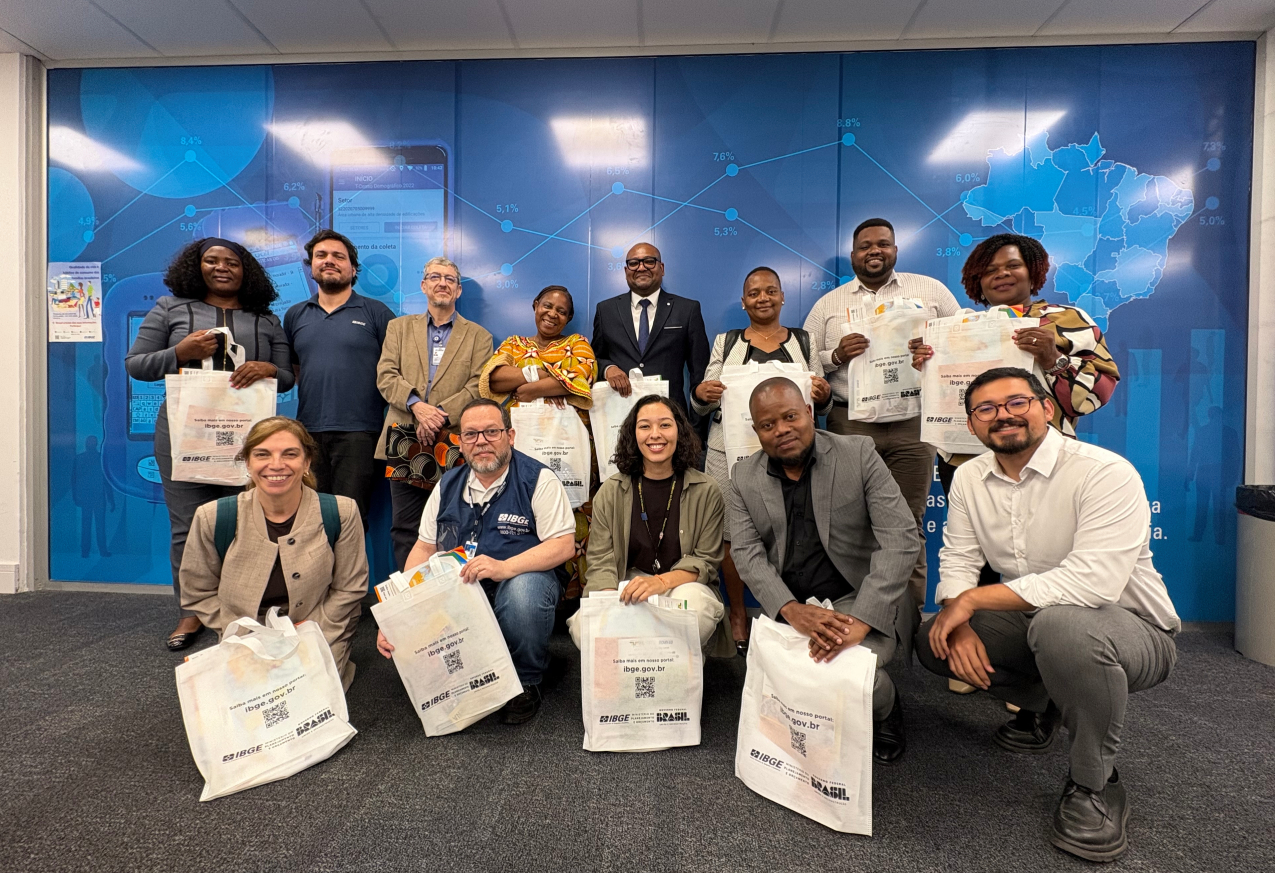
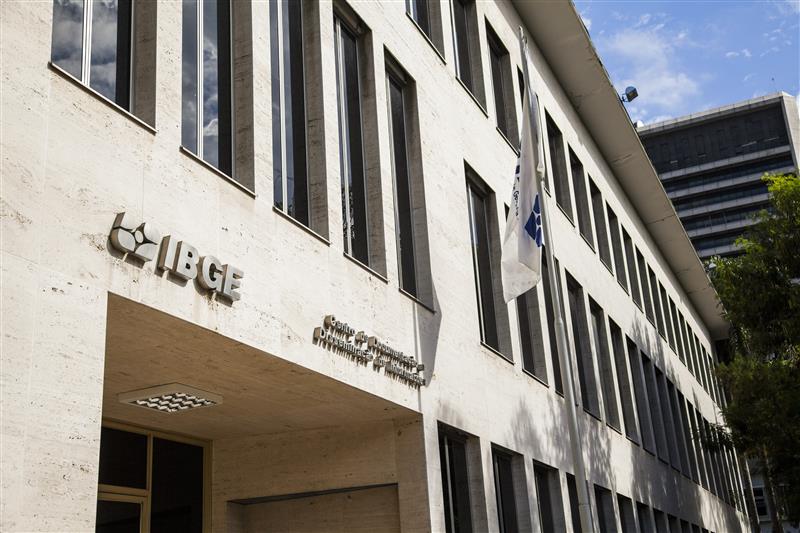
Last Monday (12), Brasília hosted a technical meeting between the Brazilian Institute of Geography and Statistics (IBGE) and a delegation from Mozambique, held at the State Superintendency of the Federal District (SES/DF). The visit's main objective was to learn about the data collection, processing and analysis engineering adopted by Brazil, with a special focus on institutional coordination mechanisms and the processing of information produced by different institutions within the scope of the Sustainable Development Goals (SDGs).
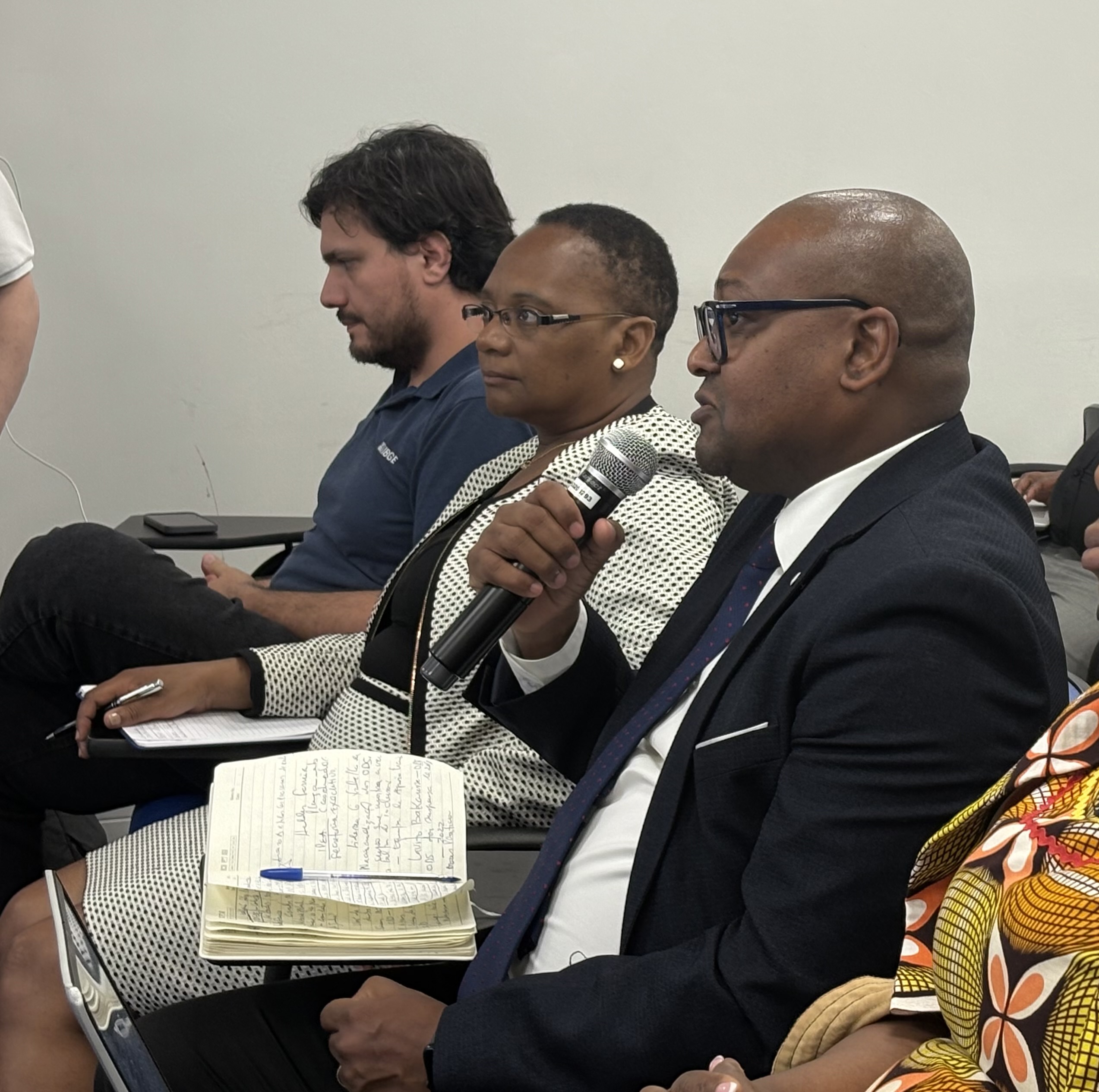
After showing an institutional video from the IBGE, the superintendent of SES/DF, Gabriel Antonaccio, welcomed the guests and explained the dynamics of the presentations throughout the morning. Then, Issufo Jaide Madeira, National Director of Monitoring and Evaluation of the Ministry of Planning and Development of Mozambique, presented the delegation's expectations. According to him, Mozambique is a signatory to the 2030 Agenda and presented its first Voluntary National Report (RNV) in 2020, and is now preparing for the second cycle, scheduled for 2026. Madeira highlighted the interest in learning about the Brazilian experience and the role of institutions in the production of information and methodologies, highlighting the expectation of understanding how the IBGE works in collecting, systematizing, analyzing, validating and harmonizing data.
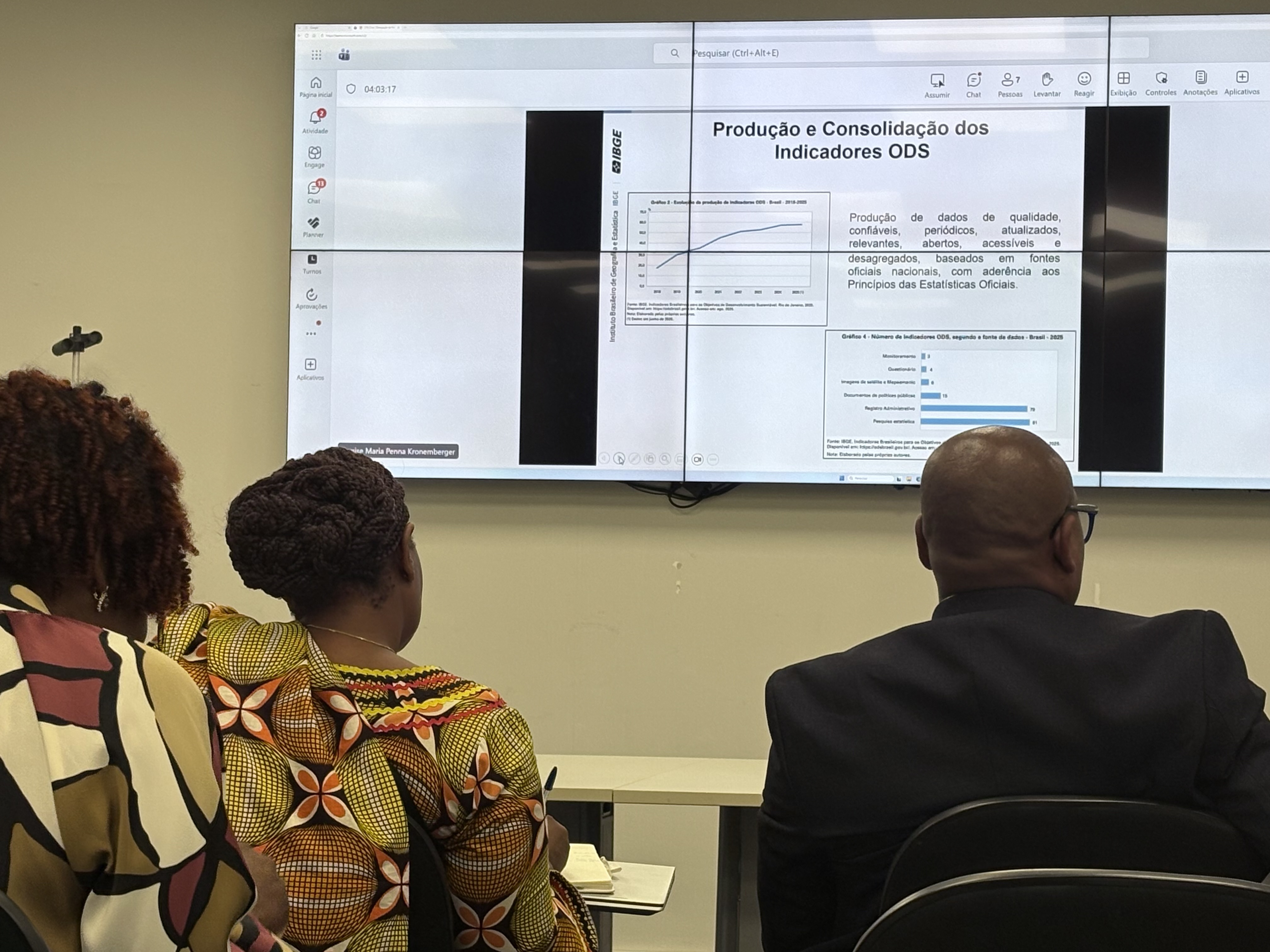
Denise Kronemberger, coordinator of the IBGE SDG Indicators Project, participated in the event remotely and presented Brazil's governance and institutional coordination structure for the production of SDG indicators. The coordinator explained that the IBGE plays the role of national coordination, coordinating internal committees, thematic working groups and technical units, in addition to maintaining a collaborative model with ministries, survey institutes, international organizations and other data producers. Kronemberger also emphasized the importance of institutional articulation mechanisms, such as the National Commission for the SDGs (CNODS), and the SDG Brazil Platform in disseminating information. The “SDG indicators must be based on quality, reliable, disaggregated data and produced from official sources, ensuring relevance and transparency for monitoring the 2030 Agenda,” stated her.
Next, Leonardo Bergamini, biodiversity analyst and coordinator of the production of SDG 15 indicators, presented the monitoring of global Terrestrial Life indicators. He detailed the data flow and sources, the institutions involved and, especially, the production, integration and analysis cycle of indicator 15.3.1, which deals with land degradation. “More than numbers, the SDG 15 indicators are a call to collective action and strengthening partnerships is as valuable as the information produced,” highlighted Bergamini.
Dialogues between institutions

Maria Tereza Carnevale, Planning and Management analyst at the IBGE, also participated remotely in the meeting and presented the Interactive Geographic Platform, highlighting its role as a visualization and integration tool for territorial information, which supports analysis, monitoring and decision-making in the context of the SDGs.
After the presentations, there was time for questions and answers. The Mozambican delegation focused its questions on the lessons learned by the IBGE, on the processes of cooperation, governance, communication, training and innovation, in addition to the relevance of data for the formulation of public policies and the 2030 Agenda. One of the points of greatest interest was the differentiation of the roles of the IBGE and the Institute for Applied Economic Research (Ipea) in the context of the SDGs. Denise Kronemberger explained that the IBGE works mainly in the construction and monitoring of data, while Ipea develops analyses of a more evaluative nature, focused on public policies.
Issufo Jaide Madeira thanked the SES/DF team for welcoming and sharing experiences: “We took a lot of knowledge from here and we hope to be able to reinforce our interaction and cooperation between institutions; we have to improve many things, and this only reinforces that it was worth coming, we are going with a full suitcase,” highlighted him.
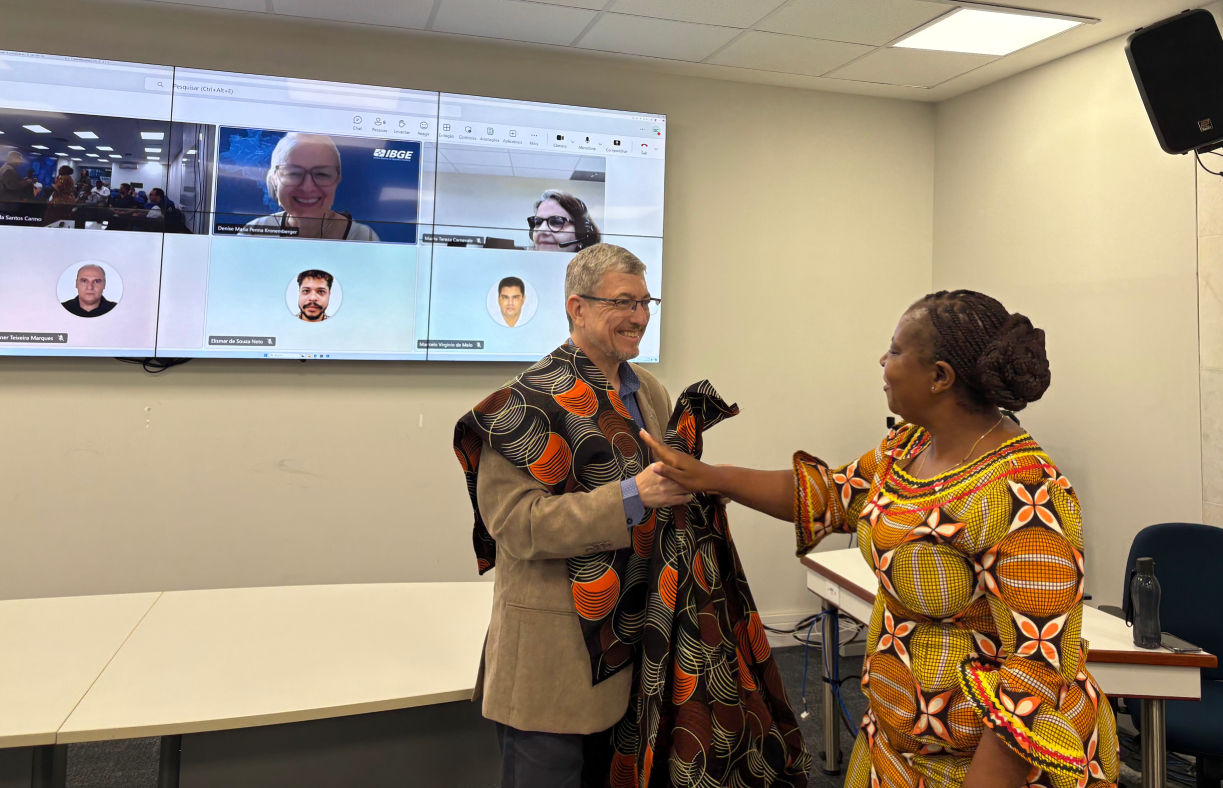
Before concluding the meeting, the delegation delivered a symbolic gift to SES/DF, in gratitude. When offering a capulana, Marta Chaquice explained: “We want to leave a small memory. The capulana is our everything, with it we can protect ourselves from the cold, wrap a baby, tie up our hair... it is something very important for us and now you can always remember that we were here,” concluded the director. The SES/DF team also thanked all participants for their presence and distributed institutional gifts and copies of IBGE publications at the end of the meeting.
Participating, from the IBGE, were Gabriel Antonaccio, superintendent of SES/DF; Marcelo Alessandro, operational coordinator of the Census; Leonardo Bergamini, Biodiversity analyst and coordinator of the production of SDG 15 indicators; Denise Kronemberger, coordinator of the SDG Indicators Project and Maria Tereza Carnevale, Planning and Management analyst.
The Mozambique delegation was composed of Issufo Jaide Madeira, national director of Monitoring and Evaluation; Cristina Matusse, national director of Planning; Marta Chaquice, deputy national director of Sectoral Statistics at the National Institute of Statistics; Francisca Pereira, head of the Territorial Department; Abdul Razak M. Adamo, Monitoring technician and focal point for the Voluntary National Review of the SDGs; Nereno Jussar, senior Monitoring and Evaluation technician; Evenilde Tamele, Budget and Accounting technician and SDG focal point; and Petrick Costa, Portfolio analyst at the United Nations Development Program (UNDP). Representatives of the National Commission for the SDGs of the General Secretariat of the Presidency of the Republic were also present: Hérica Ewandyr and Miriam Licnerski, technical assistants, and Marina Cavalcanti, technical advisor.
More about the visit
The visit is part of the agenda of the General Secretariat of the Presidency of the Republic, which this week receives the Mozambique delegation to exchange experiences on the Voluntary National Report (RNV). The document is an official government report in which countries present progress and challenges in achieving the goals of the 2030 Agenda. Brazil and Mozambique are expected to present their next reports in 2026, reinforcing the importance of international cooperation and strengthening national information systems.