

12th Census of Agriculture
IBGE advances on the second day of the 2nd pilot test for the Census of Agriculture in Uruçuí


May 12, 2026 05h02 PM | Last Updated: May 14, 2026 10h26 AM

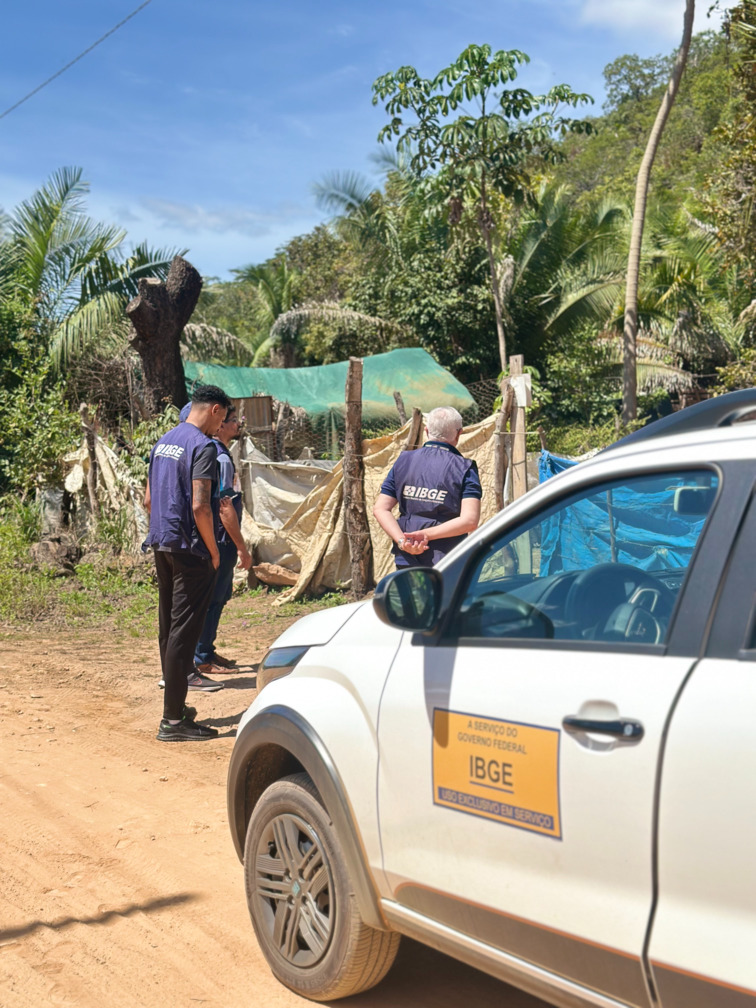
The Brazilian Institute of Geography and Statistics (IBGE) held, this Tuesday (12), the second day of activities of the 2nd pilot test of the 12th Census of Agriculture, Forestry and Aquaculture in the municipality of Uruçuí, in the southwest of Piauí. The initiative is part of a fundamental round of preparation for the national survey, focusing on the evaluation of methodologies, data collection instruments and field procedures.
According to the state superintendent of the IBGE in Piauí, Leonardo Passos, the location represents an important synthesis of the Brazilian rural landscape:
“We are in Uruçuí, in the southwest of Piauí, a city with a large territorial extension located in the Matopiba region. It is a municipality that stands out for its agribusiness, but also for the diversity of its production. We have both large and small producers, as well as traditional communities, such as indigenous, quilombola, and riverside communities. It is the largest municipality in territorial extension in Piauí, with more than 8,400 km², and this diversity is fundamental for testing the Census.”
First results and advancements
The first day of the pilot project was dedicated to team alignment, logistical organization, and territory reconnaissance. According to the superintendent, the teams have already begun their initial fieldwork:
“The first day was a time for adjusting teams, systems, and equipment. The team began to get familiar with the territory, the enumeration areas, went into the field, and administered some questionnaires, identifying points that need adjustment. On the second day, we sought to correct some observed flaws, in addition to intensifying our approach to the population,” says Mr. Passos.
Inclusion of Traditional Communities
During the action, the IBGE teams held meetings with local leaders to better understand the specificities of these populations. One example was the visit to the Gueguê do Sangue Indigenous Community.
“We held a meeting with the community to talk to the leaders, understand the logistical challenges of access, and begin administering the questionnaire. This contributes to a broader picture of traditional communities in Brazil,” explained the superintendent.
Importance for the Communities
For Mrs. Deusa, representative of the Sangue Community, the presence of the IBGE reinforces the visibility of indigenous populations and their production:
“The Sangue Community is very old, it existed before Uruçuí. We are from the Goiás ethnic group. We were separated from our land, but we continue fighting to return. The land is very good, and we are waiting for this return soon. This survey does help. The more information, the better. The IBGE always helps because the information reaches the entire country. For us, this is very important.”
Testing for the National Census
According to the technical coordinator of the Census of Agriculture, Pedro Andrade, the pilot test serves to test all stages of the process before conducting the nationwide survey:
“We are carrying out an important stage, which is the pilot test, to test everything from the questionnaire to the applications, the approaches, and the difficulties in the field. We want to know if the respondent can understand the questions and identify points that need to be adjusted. It is a fundamental test to calibrate the entire process, so that the Census can proceed with full functionality.”
Logistical Challenges and Diversity
Conducting the pilot test in Uruçuí also allows for testing relevant logistical challenges, such as long distances and access to remote areas.
“Uruçuí was chosen because it well represents the different realities of the country. It is a municipality with a large territorial extension, far from the IBGE structures, which brings important logistical challenges. At the same time, it has great productive diversity, from agribusiness to traditional communities,” explained the coordinator.
Activities
You can follow the days of activities on the News Agency, Census official website and on our social media: Instagram, Tik Tok and Facebook.