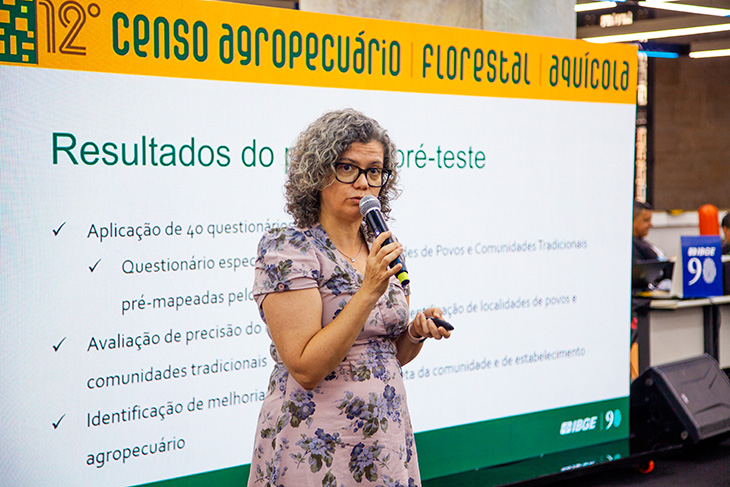

12th Census of Agriculture
Public conference shows details of second pilot test of the 12th Census of Agriculture, Forestry and Aquaculture


May 08, 2026 02h35 PM | Last Updated: May 08, 2026 04h46 PM
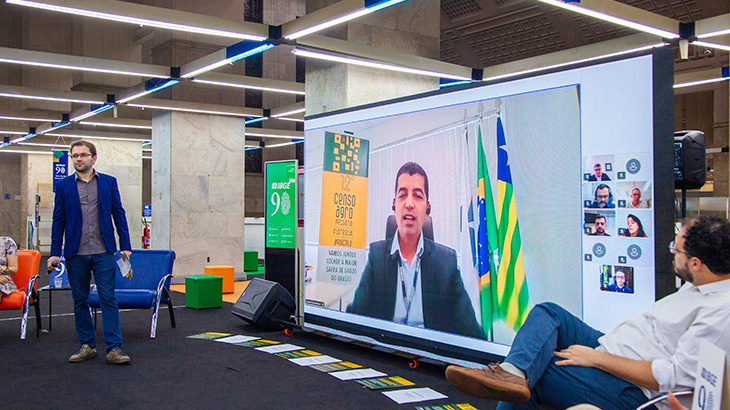
This Friday (8), the Brazilian Institute of Geography and Statistics (IBGE) held a public conference with details about the second pilot test of the 12th Census of Agriculture, Forestry and Aquaculture, which will take place next week in six cities, in four Major Regions.
The president of the IBGE, Marcio Pochmann, recalled the aspects involving this operation. “We are prepared for the second largest statistical operation of the decade, which will take an x-ray of the Brazilian countryside. With this, we will have a great diagnosis. Based on the results collected, the IBGE will be able to implement an annual sample survey in the field.”

The logistics of the dissemination were presented by José Daniel Castro, coordinator of the CDDI, who highlighted the contents that will be offered to communicators across the country. “We will have on-line coverage in each city, on our websites and social media, thus following the complexity of this operation.”
The second pilot test will take place between May 11 and 22, 2026 in Barcarena (PA), Uruçuí (PI), Rio Verde (GO), Corumbá (MS), Irati (PR) and Viamão (RS), cities chosen for this stage of testing.
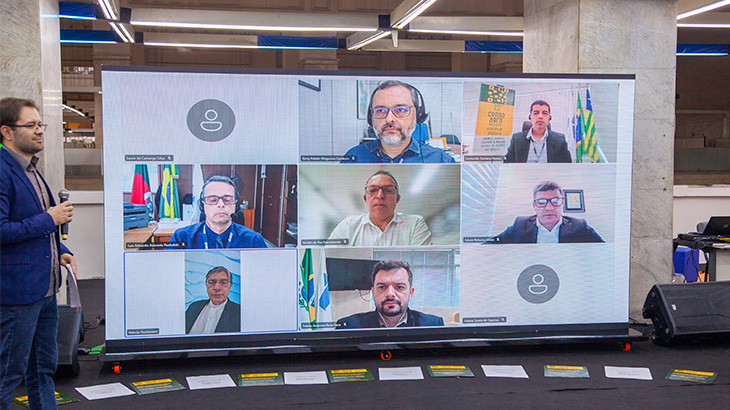
Edson Vieira, superintendent of the IBGE in Goiás, highlighted the work with the teams. “We are in the training process, and everyone is excited. We have a 13% share of the national GDP in the state, linked to this area. The choice of Rio Verde was due to the technology used in the field.”
For Mario Pinna, the IBGE superintendent in Mato Grosso do Sul, the highlight will be the region's complexity. “It is a Pantanal area, with traditional communities and strong mineral extraction.”
Rony Cordeiro, superintendent of the IBGE in Pará, spoke of expectations. “It is a pleasure to participate in this test and have the opportunity to evaluate the training chain, in addition to calibrating the new technological tools.”
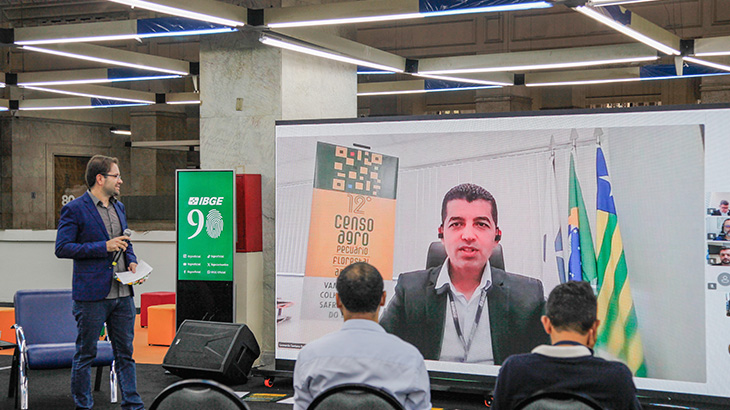
Leonardo Passos, superintendent of the IBGE in Piauí, also highlighted the chosen location. “We will go to the cerrado region, in an important agricultural frontier area. It is the second largest GDP in our state.”
Tobias Faria, superintendent of the IBGE in Paraná, brought a special meaning to the state. “In addition to the strength of productive diversity, we have traditional peoples and communities, such as the Faxinalenses, who have the characteristic of their own land cultivation and environmental concern.”
Luis Eduardo, superintendent of the IBGE in Rio Grande do Sul, recalled the floods of 2024. “We will have a specific block on environmental issues, so it is a suitable territory for this new questionnaire feature.”

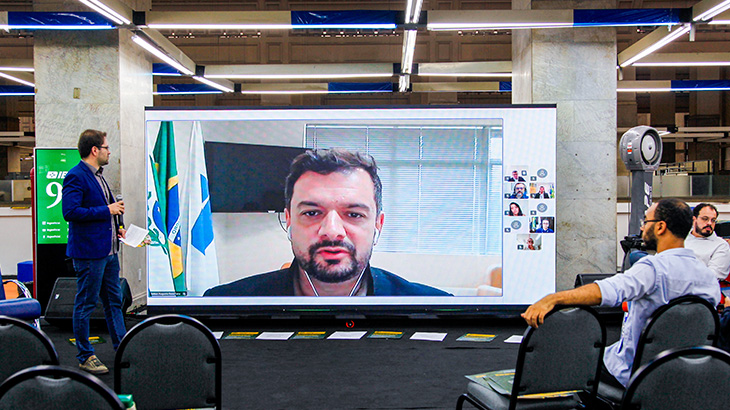
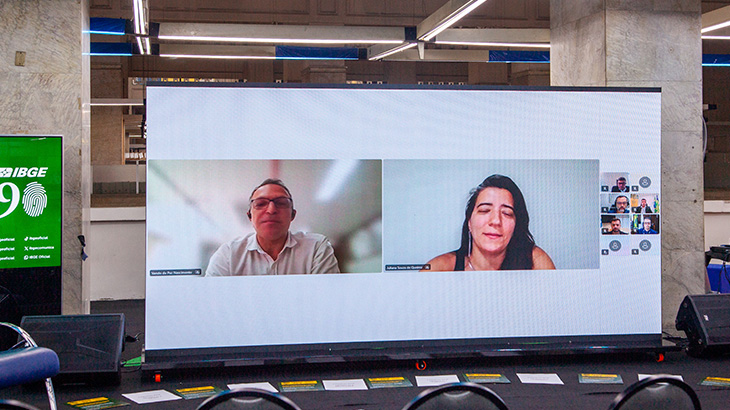
The complexity of the operation
Gustavo Junger, Director of Surveys at the IBGE, thanked the teams that will be involved in the second pilot test of the 12th Census of Agriculture, Forestry and Aquaculture. “It is a time of ripening after the first test in December 2025. Now, we are heading towards the experimental Census in November.”
“Census operations are challenging, from travel to access to more distant areas, a complex preparation. The operation will promote a portrait of the countryside, from large producers to family farming, how many there are, location, mode of production. In short, a range of information that will be used in public policies,” reinforced him.
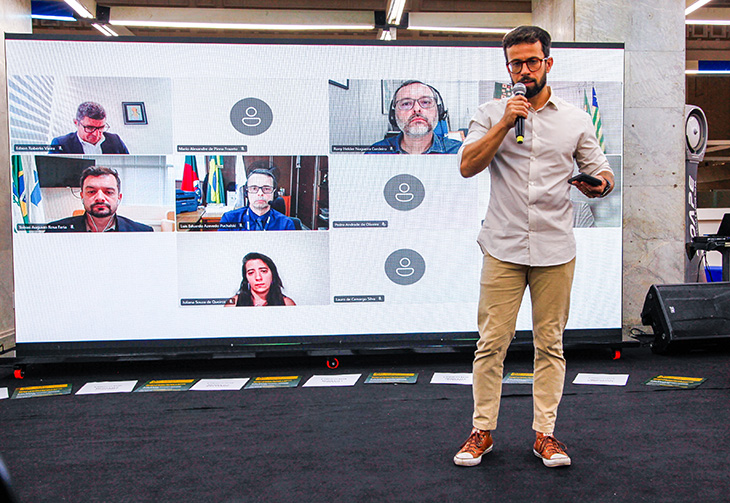
Fernando Damasco, Coordinator of Census Operations, presented operational aspects. “It is an important moment, in which we consolidate adjustments in the technical and operational project. A census like this involves our entire institution, maturing the methodology and maturing the processes.”
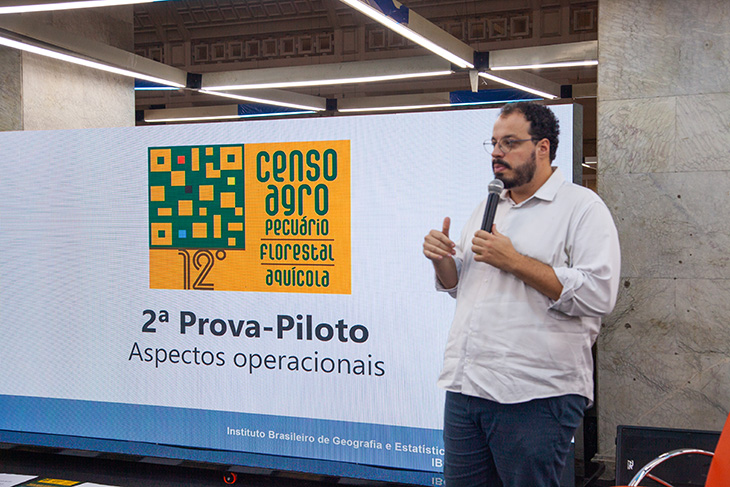
Vando da Paz Nascimento, Coordinator of Agricultural Statistics, highlighted the diversity of themes. “It has a large dimension, because it covers the entire national territory and a questionnaire with several data crossings.”
Juliana Queiroz, Technical Manager of the Census Project, also explained the route taken. “To reach the Census, we went through stages, since last year, where we already carried out the assessment, we changed and we are going to this second stage. With the security of these tests, we arrive more confident in the Experimental Census.”
The Manager of Traditional Peoples and Communities and Specific Population Groups, Marta Antunes, pointed out that the operation will expand the portrait of the diversity of the Brazilian countryside. “The first test covered several situations and the main results were the functionality of the questions, both in the locations where they are concentrated and outside them, and the important aspects of productive agri-food systems.”