
Census of the Population Experiencing Homelessness
In São Paulo, IBGE launches 1st National Census of Population Experiencing Homelessness


April 30, 2026 04h40 PM | Last Updated: May 04, 2026 04h13 PM
The Brazilian Institute of Geography and Statistics (IBGE) held, this Thursday (30), in São Paulo (SP), at Sesc Santo Amaro, the third out of three regional launches of the 1st National Census of Population Experiencing Homelessness. The initiative represents a historical milestone by establishing, for the first time, a national statistical survey dedicated exclusively to this segment of the population.
Developed by the IBGE in partnership with public institutions, civil society organizations and social movements, the Census is intended to count and characterize the demographic and socioeconomic characteristics of the Brazilian homeless population, constituting an essential instrument for strengthening public policies aimed at this population group, by providing a robust, standardized and comparable statistical base at the national level.
The survey will allow us to identify, with methodological rigor, the territorial distribution, the sociodemographic profile and the living conditions of the homeless population, filling historical gaps arising from the fragmentation and heterogeneity of existing sources.
The opening of the event featured a speech by Flávia Carvalho, Social Programs Manager at Sesc São Paulo, who highlighted that hosting the meeting reinforces the institution's commitment to articulating actions aimed at social inclusion. “This is a space for listening and sharing knowledge. Following the launch of the PopRua Citizenship Program and the First Census of Population Experiencing Homelessness, the expectation is to strengthen partnerships and expand initiatives that contribute to community coexistence and social transformation,” stated her.
At the first session, dedicated to the theme “The role of human rights in the territory,” the PopRua Citizenship Program, coordinated by the Federal Government, was presented. The initiative envisages the implementation of care units with multidisciplinary teams, which integrate specialized human rights services into a reception structure, including offering hygiene, hydration and storage of belongings.
During the debate, the director of Homeless Population Policies at the Ministry of Human Rights and Citizenship (MDHC), Malu Gama, highlighted the scope of the program. “We are opening 47 PopRua Citizenship units across the country, with São Paulo being the municipality with the largest number of facilities. There are seven here. This is a state response to the increase in violence against this population, with an investment of R$70 million, based on the understanding that human rights are the basis for access to other public policies,” stated her.

The project coordinator at Rede Rua Association, Andreza do Carmo, highlighted the importance of data production for the development of public policies. “Social movements have been demanding for years that a national count of this population be carried out. Having detailed and qualified information is essential to guide actions that are not based solely on estimates or local perceptions. There is great expectation regarding the work of the IBGE, which can strengthen this process,” highlighted her.
After the first session, the event featured a cultural performance by the band Chá do Padre, with a repertoire of Brazilian popular music.
Anderson Lopes Miranda, general coordinator of the Intersectoral Committee for Follow-up and Monitoring of the National Policy for the Homeless Population (CIAMP-Rua), highlighted the process of collective construction of the initiative. “It took years of mobilization and debate until we achieved a national census of the homeless population. We participated in methodological workshops to contribute to the survey and present our perspective on how this survey should be conducted."
Márcio Pochmann, president of the IBGE, highlighted the historical nature of the initiative. “Carrying out the first Census of Population Experiencing Homelessness represents, for the IBGE, a way of paying off a debt owed by the statistical system to this portion of the population. Brazil has already carried out 12 population censuses based on international references that use housing units as a starting point, which, in practice, excludes those who do not have a fixed address. Now, we are moving forward to include this population,” stated him.
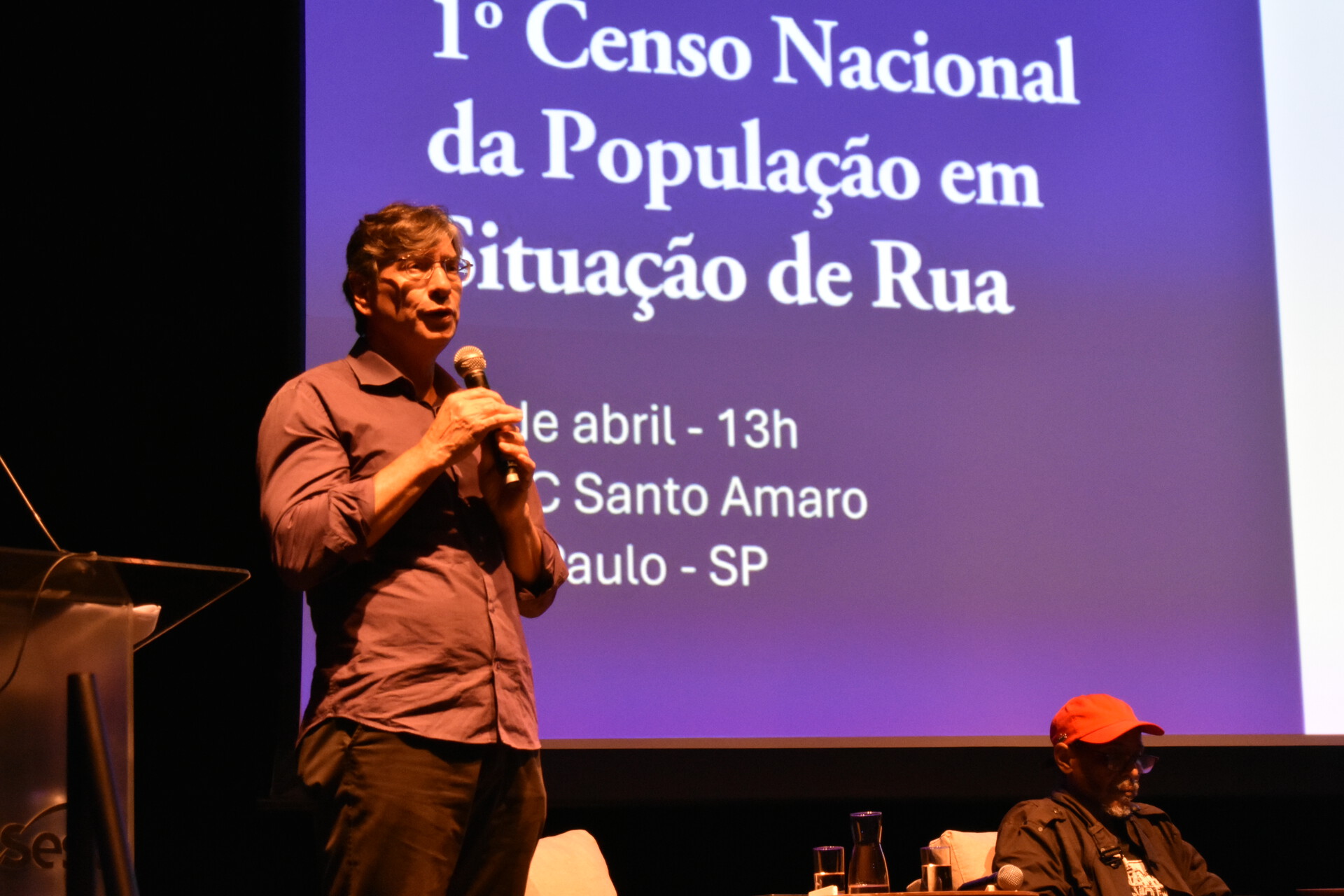
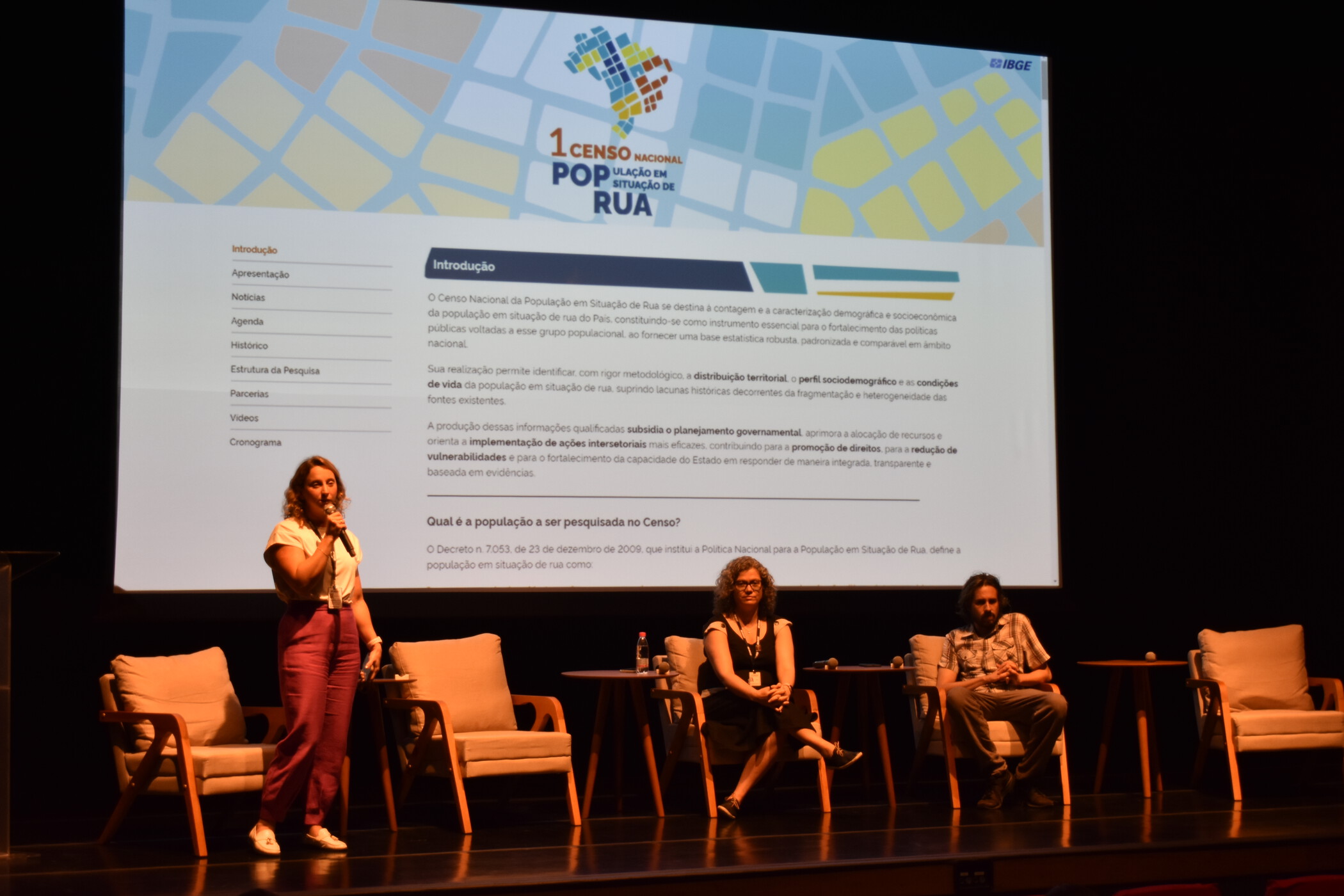
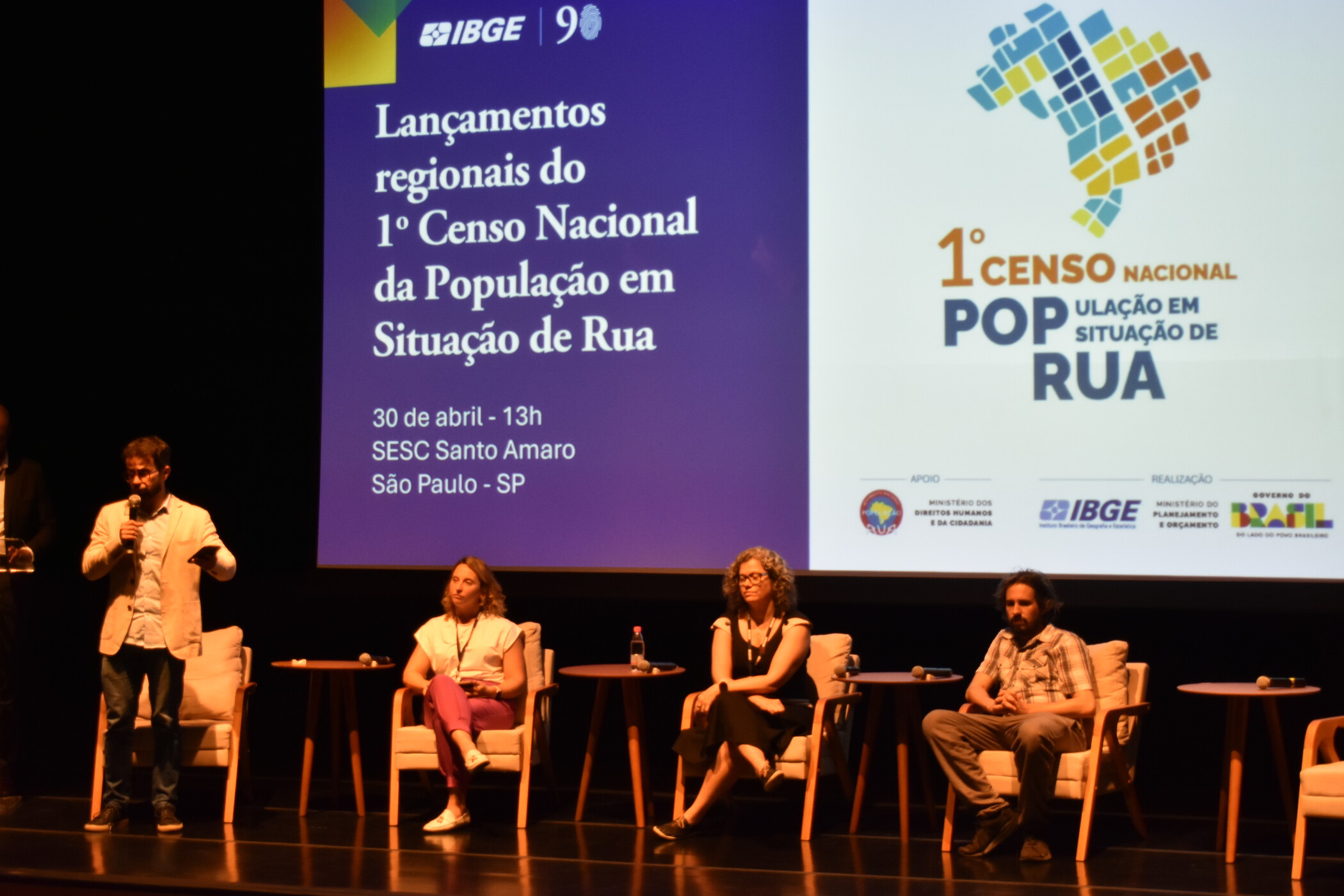

According to him, the survey is the result of an effort built over time. “This is not a recent decision, but a process that seeks to understand who these people are, their living conditions and their trajectories, in order to support the formulation of integrated public policies at the federal level,” added him.
IBGE´s Director of Surveys, Gustavo Junger, highlighted the innovative nature of the initiative. “This is an ambitious project, awaited by the IBGE for many years. Portraying Brazil with the information necessary for the exercise of citizenship is the mission of the IBGE, and carrying out this Census is aligned with this purpose,” stated him.
The technical coordinator of the Population Census, Giulia Scappini, presented the official page of the operation. “On this website, we will share with the population all stages of the survey, which aims to characterize the homeless population, its territorial distribution, sociodemographic profile and living conditions,” explained her.
The technician from the IBGE´s Department of Social Indicators, Bruno Mandelli, detailed the structure of the questionnaires that will be used in the data collection. According to him, the instruments were adapted to the different realities of the interviewees, including a specific questionnaire for children up to 12 years old. “The proposal is to address this population with questions appropriate to each context, ensuring the quality of the information collected,” highlighted him.
The manager of Traditional Peoples and Communities and Specific Population Groups at the IBGE, Marta Antunes, highlighted the methodological challenges of the operation. “Unlike traditional censuses, based on enumeration areas, in this case it was necessary to look at the territory based on specific routes. The pre-mapping work, carried out with the collaboration of several offices and society, will be fundamental to identifying the places where this population is found, whether in reception spaces or on public roads. We are incorporating important innovations to make this methodology viable,” stated him.
Check out how the launch was like in Belém (PA) and in Rio de Janeiro (RJ).