
2022 Census
IBGE launches publication “Indigenous Brazil”, with data from the 2022 Census


December 15, 2025 02h49 PM | Last Updated: December 17, 2025 10h40 AM
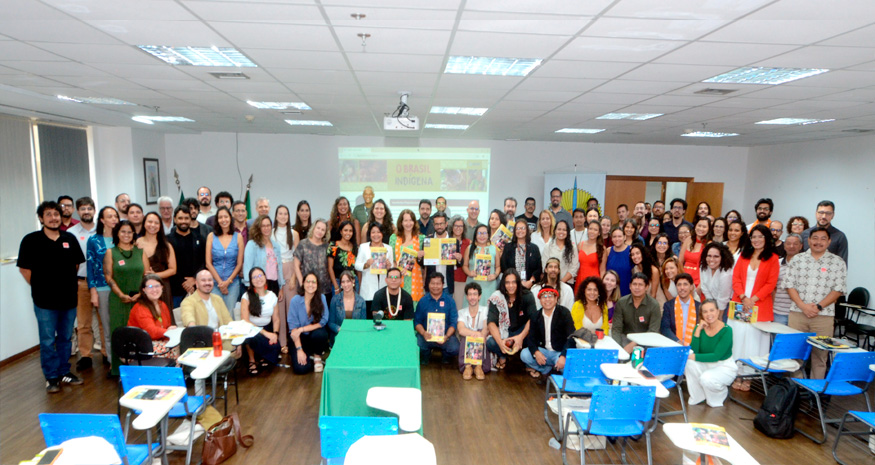
The Brazilian Institute of Geography and Statistics (IBGE) launched this Friday (12), at the Auditorium of the National Foundation for Indigenous Peoples (Funai), in Brasília, the publication “Indigenous Brazil”, which brings together the main results of the 2022 Population Census on the Indigenous population in the country.
Prepared in partnership with the Ministry of Indigenous Peoples, Funai and the United Nations Population Fund in Brazil (UNFPA), the publication systematizes unprecedented information on Indigenous Peoples, including socio-demographic characteristics and those of their housing units, a list of ethnicities and groups, languages spoken or used in households, as well as the spatial distribution of the main indicators. This data offers a detailed overview of the diversity and presence of the Indigenous population in the Brazilian territory.
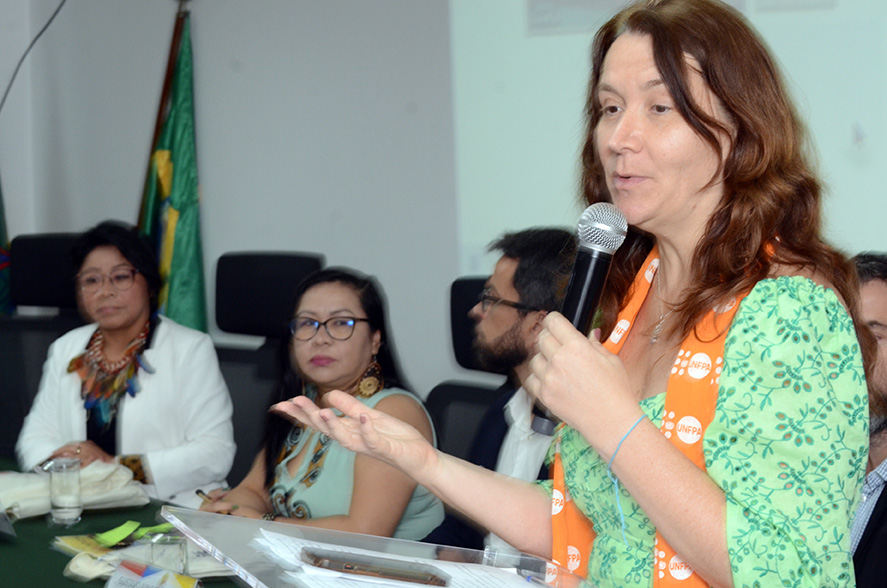
Júnia Quiroga, assistant representative of the United Nations Population Fund in Brazil (UNFPA), highlighted the unity of the organizations involved in launching the publication:
“These are partners who fight for the visibility and recognition of Indigenous Peoples in Brazil. Here, we amplify the voices that have historically been silenced.” She added: “Supporting IBGE's survey is to remember its mission of portraying Brazil in all its dimensions and characteristics. This data feedback phase demonstrates the democracy of the Census, which describes how we are and how we live. The material presented provides, in a didactic way, information that can be transformed into public policies.”
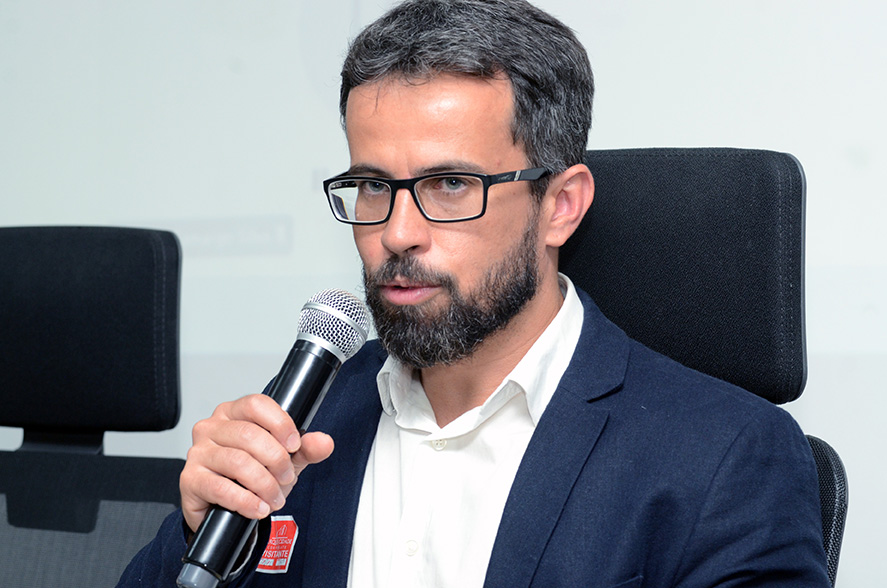
Gustavo Junger, Director of Surveys (DPE) at the IBGE, recalled the path taken in the last Population Census: “We had the challenge of expanding data collection to traditional peoples and communities, which began in the 2010 Census, and this only happened thanks to the partnerships we have here. Our goal is to continue this work, and for that reason, a new management position was created for this type of activity.”
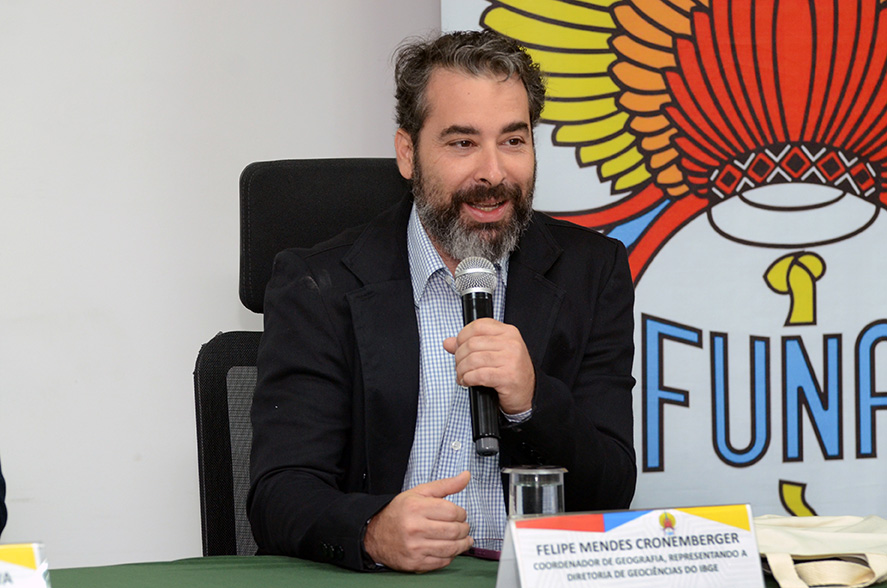
Similarly, Felipe Cronemberger, coordinator of Geography at IBGE and representative of the Directorate of Geosciences (DGC), cited the newly created management unit. “Within the DGC, the Territorial Bases Management unit was created, and with this, we were able to go further with our partners, expanding our visits to communities and portraying this reality of the country.”
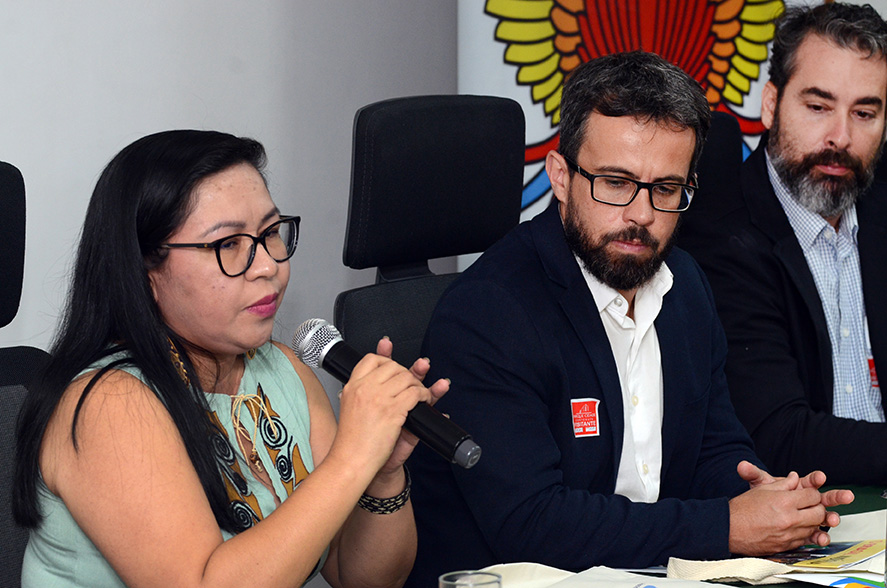
Mislene Mendes, acting president of Funai, emphasized the partnership that resulted in the publication: “With the help of our technicians and translators, the IBGE was able to enter the communities, improving the data collection. This data allowed for an even more realistic portrait of our reality, including information that we didn't even know and that will help in the restructuring and development of public policies.”
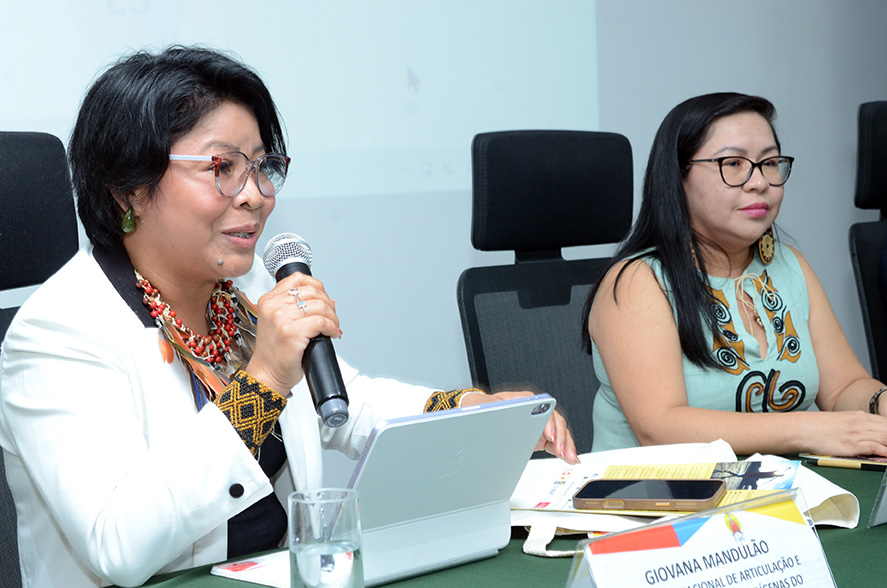
The National Secretary for Articulation and Promotion of Indigenous Rights of the Ministry of Indigenous Peoples, Giovana Mandulão, described the launch as "historic." "The work of the 2022 Census resulted in representation for Indigenous Peoples. The data are not just numbers, but the materialization of a historical struggle, the resumption of our existence in a country that, for centuries, tried to erase us. The IBGE improved its capacity in data collection, revealing a complexity that was previously ignored. Data are the beginning of policy-making, an instrument of work and struggle for our civil servants," she highlighted.
The publication can be accessed at the following link: IBGE | Biblioteca and the digital version: https://www.ibge.gov.br/brasil-indigena/
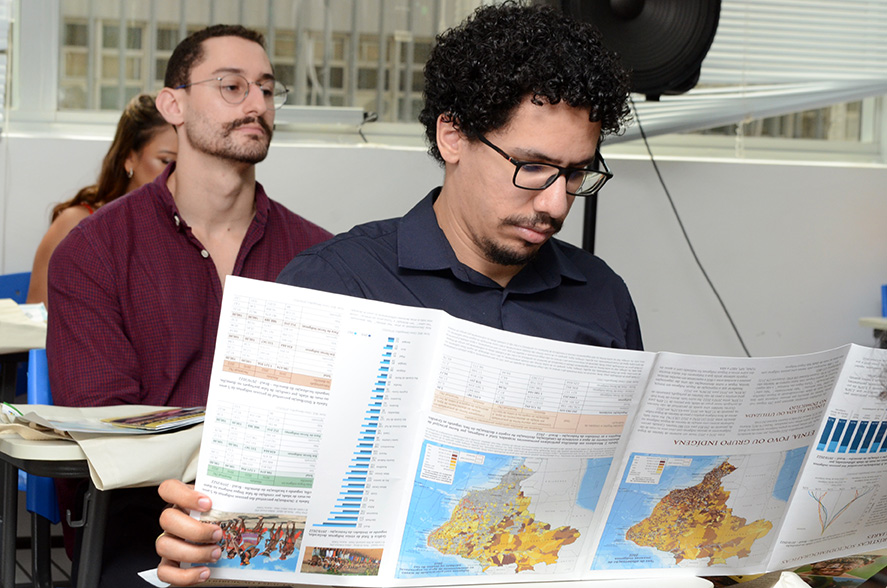
Panel presented the material's development
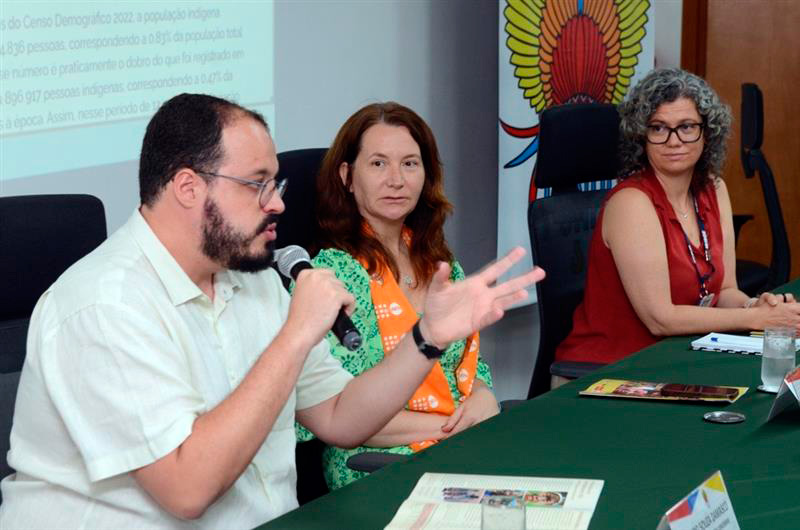
As part of the launch program, the panel “Indigenous Brazil: Demographic Evidence for the Recognition and Promotion of the Rights of Indigenous Peoples” had two representatives from the IBGE, who presented the path taken for data dissemination.
Marta Antunes, Manager of Traditional Peoples and Communities and Specific Population Groups, reaffirmed the importance of the partner agencies: “This brochure reflects the collaborative work that doesn't stop now, as we have finished disseminating the base questionnaire, but next year we will continue with other disseminations.”
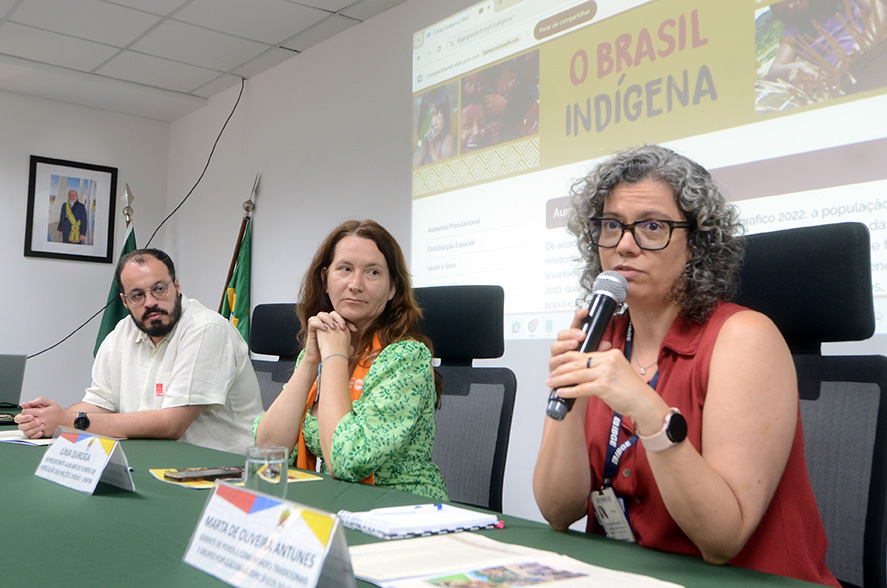
Ms. Antunes further explained how the data is being disseminated: “We have several formats. In the brochure, you can find links that provide access to the survey process, maps, and tables. There is also IBGEeduca, a portal that translates the indicators for teachers and students.”
Fernando Damasco, Coordinator of Census Operations, thanked Funai and its staff. “With this partnership, we had an enriching experience. We worked in different roles and together we were able to do a good job,” he said, while presenting the digital and interactive version of the brochure.