
National industry
National industry retreats 1.2% in December; closes 2025 rising 0.6%


February 03, 2026 09h00 AM | Last Updated: February 03, 2026 12h25 PM
Industrial production fell 1.2% from November to December 2025, accentuating the predominantly negative behavior observed since September 2025, a period in which it accumulated a loss of 1.9%. This was the most intense drop since July 2024 (-1.5%). In relation to December of the previous year, the industry increased 0.4%, interrupting two consecutive months of negative rates: November (-1.4%) and October 2025 (-0.5%). The quarterly moving average in December was -0.5%.
In 2025, the industry accumulated growth of 0.6%, the third consecutive year of increase, after recording 3.1% in 2024 and 0.1% in 2023. With the December result, industrial production is 0.6% above the pre-pandemic level (February 2020); but it is still 16.3% below the record level reached in May 2011. The data comes from the Monthly Survey of Industry (PIM), released today (3) by the IBGE.
According to André Macedo, PIM manager, “over the course of 2025, there was a clear loss of pace, with the industrial sector going from an expansion of 1.2% in the first six months to zero change in the second half. This lower dynamism has an important relationship with the more restrictive monetary policy, especially marked by the increase in interest rates, which directly impacts investment decisions by companies and consumption decisions by families.”
In 2025, the 0.6% increase compared to 2024 showed positive results in two out of four broad economic categories, 15 out of 25 sectors, 42 out of 80 groups and 49.6% of the 789 products surveyed. Among the activities, the main positive influences came from mining and quarrying industries (4.9%) and food products (1.5%). On the other hand, among the ten activities with a reduction in production, coke, petroleum products and biofuels (-5.3%) exerted the greatest influence on the formation of the industry average.
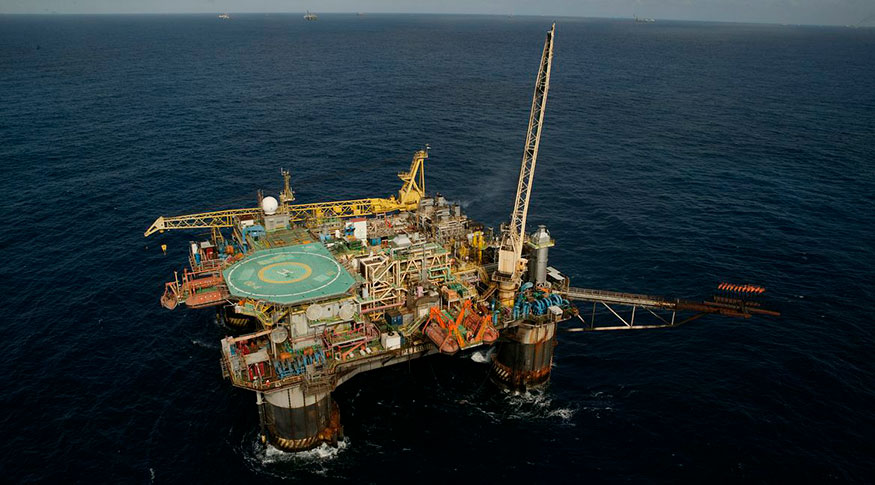
“The mining and quarrying sector, especially driven by petroleum, is the main positive highlight. This is what guarantees the advancement of the total industrial sector, while the manufacturing industry had a loss of 0.2% in the year 2025,” assesses Macedo.
Among the broad economic categories, the profile of results for the twelve months of 2025 showed greater dynamism for the segments of durable consumer goods (2.5%) and intermediate goods (1.5%). On the other hand, the sectors producing semi and non-durable consumer goods (-1.7%) and capital goods (-1.5%) recorded negative rates.
With a drop in vehicles, industry drops 1.2% in December
In the 1.2% reduction in industrial activity between November and December 2025, the four broad economic categories and most (17) of the 25 sectors surveyed saw a decline in production. “December showed a widespread profile of negative rates. This spread of 17 dropping activities is the largest one since September 2022, when there were 19,” analyzes the manager.
Among the activities, the most important negative influences came from motor vehicles, trailers and bodies (-8.7%), chemicals (-6.2%) and basic metals (-5.4%), with the first two marking two consecutive months of decline in production, a period in which they accumulated losses of 10.4% and 7.4%, respectively; and the last one offsetting the 3.5% expansion accumulated in the August-November 2025 period.
Macedo highlights that the activity of motor vehicles was the one that exerted the greatest negative pressure from November to December. “The drop of 8.7% is the biggest for this activity since May 2024 (-11.6%). There is a generalized loss movement within this activity, with a drop in cars, trucks, car pieces,” explains him. The manager also highlights that “a large part of the activities that fell in the month of December, such as vehicles; chemicals; basic metals; computer equipment, electronic and optical products, were characterized by a greater presence of strikes and collective holidays in the month of December, which in some way impacted and justified these more pronounced negative rates.”
On the other hand, among the eight activities that showed an increase in production, coke, petroleum products and biofuels (5.4%) exerted the main impact on the industry average and interrupted three consecutive months of decline, a period in which it accumulated a loss of 5.0%.
Among the broad economic categories, still in comparison with November, capital goods (-8.3%) and durable consumer goods (-4.4%) recorded the most pronounced negative rates in December 2025, with the first one interrupting three consecutive months of growth in production, a period in which it accumulated a gain of 1.5%; and the second one stepping up the 3.0% drop seen in November 2025.
The sectors producing intermediate goods (-1.1%) and semi and non-durable consumer goods (-0.7%) also showed a decline this month, with the first one accumulating a reduction of 3.2% in the last four months of 2025; and the second one offsetting part of the 1.5% growth recorded in the October-November 2025 period.
More on the survey
PIM Brazil has been producing short-term indicators since the 1970s regarding the behavior of the real product of mining and quarrying and manufacturing industries. March 2023 marked the beginning of the release of the new time series of monthly indexes of the industrial production, after a redesign to update the sample of activities, products and informants; create a new weighting structure of the indexes based on the most recent industrial statistics; update the base year of reference of the survey; and incorporate new Federation Units in the release of regional results of the survey. These methodological changes are required and they aim at incorporating the economic changes of the society.
The survey results can also be consulted on the Sidra database.
The next release of industrial production – Brazil, with results for January 2026, will be on March 6.